Leaderboard

.thumb.jpg.9a49e1b2f22a6d34a345152c50044aa9.jpg)

Popular Content
Showing content with the highest reputation on 07/30/2024 in all areas
-
4 points
-
No. I just posted a (not even comprehensive) list of other various gifts and handouts he's received from his billionaire buddies, amounting to hundreds of thousands of dollars at least. If it was above-board then he would report it, and would recuse himself from decisions involving his "friends" or the causes they promote. Justice Thomas, sitting at the pinnacle of the US legal system, demonstrates a cartoonish lack of professional ethics, and holds himself to a lower standard than the average bank teller.2 points
-
It seems that this is a very popular demand these days, make something up and insist everyone believe it....you can pull info from our rectums and proclaim it to be true...make it loud enough and say it over and over again, (Climate barbies theory not mine) then it must be true...like the earth is flat, the moon is made of cheese, bigfoot, .... ... We demand proof on almost everything yesterday, Boomers used science facts and figures to prove if something existed or not...I watched a documentary recently about bigfoot...Yup these guys made an entire industry out of a hairy man roaming the woods, and when asked to prove it they come up with very grainy photos, or plaster casts of footprints...and of course the stories. which get better every time someone tells them........ MAN has screwed up almost more of the planet that much is a fact....you can see it smell it, taste it, touch it...but climate is changing but is unprovable, but every time there is a fire or storm, tornado, or a fart is heard from the north, it is all due to climate change.....and the only thing we have proof of is it is all impossible to prove, thats a huge leap of faith...2 points
-
Was the simpsons the opening of a world event intended to bring the countries of the world together and to be a celebration of the accoplishments of their greatest athletes? Nope. Is the purpose of the simpsons to mock and satire the world specifically to cause people to reflect and laugh? Yep. Are you a bit of an !diot for even trying to make that comparison. Ohhh hell yeh.2 points
-
So to recap: the location s reasonable given current needs, far less expensive than comparable alternatives and all or almost all of the cost will be covered by selling the old location More 24 Sussex-style fake hysteria ginned up by the Conservatives2 points
-
Our governments are failing us. This same crap happens in America over and over again. This guy was on the MI6 watch list... so, what, they can watch him kill people? Don't worry though, it is not terror related. The guy just hated Taylor Swift.2 points
-
So this guy was walking around freely until this attack? And just a day or so ago, authorities arrested Tommy Robinson on some absurd terrorism charges. Al Jazeera didn't see fit to publish any details about the suspect they arrested other than his age.2 points
-
And Kamala is the poster child for high intelligence.2 points
-
As a counterweight to Canada's privately and largely American owned corporate MSM and the news in particular.1 point
-
Damn. He's really going to LOSE now...1 point
-
matthew, your accusations are in fact by definition baseless. You have not provided a law that has been violated, you have not provided a competent authority advising that a law or regulation has been violated, you just make these wild accusations about how somebody has done something wrong and maybe compromised without providing any evidence whatsoever. If you're going to make these claims you need to step it up a little bit more1 point
-
Well that's what you'd expect a liar like yourself to say Yeah. Maybe stop doing that. I know you're not fond of honesty but give it a try and see if you can make it work for you. You realize every time you post that we know you're crying1 point
-
How ELSE are you supposed to prop up the liberal gov't for free?!?!? Duuuuhhhh1 point
-
About the most ass backward ill informed rant yet. "leftist globalists" How the NDP betrayed their supporters by delivering exactly what they wanted with only a handful of MPs.... and cooperated with a party that would only advance some of their policy instead of the one that would support none at all. Voters has no choice with as many as 7 or 8 parties on the ballots.... More like Primary Bullshitter Nofun Dumb Mentalcase. First Class Bellyacher1 point
-
Lol...dude...under the Soviet, every member nation had to plan the coming year. Every one of them. Yet...they were very socialist. I'll thank you for for being a wonderful example of a petulant child.1 point
-
For example, Crow's wealth comes from one of the biggest housing development companies in the US. He's done decades of political activism to undermine regulation of that industry. A very large percent of federal cases involving the Housing and Urban Development regulations used the Chevron Deference principle to uphold regulations. So when the Supreme Court struck down that principle in Loper v Romando, Harlan Crow was a direct beneficiary and stakeholder. Even the CEO of his company is a leading donor to interest groups pushing it through the court system, such as the National Mulifamily Housing Council. I do agree with you that simply giving a gift can be fine, even an expensive one. But I would argue that Harlan Crow and Clarence Thomas have all the halmarks of a patron-client relationship. There is a long pattern of dependency, lavish gifts, and support for the family's expenses etc. Allowing a billionaire to essentially own a supreme court member as his patron is obviously something that a functioning republic with rule of law would have rules against.1 point
-
Sooo - why not post them and find out? You make all these claims but there's absolutely no evidence of it and i havent' run into any reading the few stories i've seen, so it's kind of hard to believe1 point
-
I think you may need to look up what ""land use, planning, development, and environmental matters: encompasses. Where does it say "responsible for all firefighting and emergency services?" Ill be waiting....1 point
-
You know how a few little things get left out. How the average Chinese doesn't give a flying you know what that the govt is 'communist' when they're so much better off than before and everyday life is improving. And how the "communists" produced billionaires and huge global corporations. How Vietnam is "communist" but they can own their own shops and businesses and form corporations and for the first time in generations don't have bombs exploding all around them? How they live far better under communism than they did under the corruption of S Vietnam? In neither place is 'voting' for this jerk or that jerk a major life concern? Just as it never was in either country. And perhaps one should just mention in passing those fraudulent democracies like Iran, Venezuela, Haiti, etc. that are as bad, if not worse than China. And I'm still ROTFL at your Singh = Marxist lunacy. I repeat Singh is Jack Layton with 40% less sugar. That's why he didn't taste as good to a lot of voters.1 point
-
You are still crying.1 point
-
No, you were not. You keep focusing on a vague "old" argument when that isn't what the complaint was about Biden. "old" is subjective. Sure they are old... the issue is that Biden is suffering from an obvious mental and physical decline due to his being old. No, Trump is not exhibiting any of the same kinds of symptoms Biden was. This was quite evident from the debate they had, which triggered the epic coup in the Democratic party to oust Biden.1 point
-
Lol...what a dope.1 point
-
I'm trying!!! But my stupid brian and intellect and education and reasoning abilities and cognitive faculties just won't let me!!!! (help!)1 point
-
The thing is, myata. We don't buy your assessment of things. You have every right to have your assessment, but your arguments are not convincing us. Saying over and over that your view is the obvious one, and that it's the reality does nothing for your cause. What you fail to see is that many of us see the Democrat party as a lie machine. We think they have degraded themselves, but moreso. We've seen them use law fair against political opponents. We've seen them label parents who protest at schoolboards as a domestic terrorist threat. We've seen the IRS weaponized. We've seen them pretend that a man who was clearly suffering from dementia for years was absolutely fine. Nothing to see here. That was truly surreal. We see all of that, and we see that there are two choices. Of the two, we see the Democrats as far worse.1 point
-
Overall, I think the important thing to note about this kid is that, like many mentally ill people on the left or right, he is not a Trump supporter.1 point
-
This is true. The more they see and hear...the less they like her.1 point
-
She will never be more popular than she is when people dont' really know who she is.1 point
-
Chamberlain tried to sit down and work things out with Hitler, too. I’ve been on this board a while. Either you agree with the fascists or they insult you, curse at you, and attack you. I’ve given them all sorts of logical arguments, and they don’t give a hoot. They just want to watch Hitler come to power.1 point
-
You are completely bizarre in your comments. I never said anything about killing everyone who disagrees with my interpretation. I think you have shown you are incapable of rational discussion. Seriously, you need help before you get yourself into real trouble. I don't have time for that nonsense.1 point
-
Over $6-million price for new Canadian diplomatic residence in New York City no big deal, says realtor … “A $6.6-million sale doesn’t usually get much attention because, in the world of Manhattan real estate, it isn’t a significant price,” Ms. Aries said in a statement Monday, responding to questions from The Globe and Mail. “Properties are selling for a lot more,” added Ms. Aries, who is described on the company website as a “foremost expert in ultra-luxury, full-service branded residences.” …In the Douglas Elliman statement, Mr. Aabo said governments are rethinking their real estate portfolios in New York to focus on long-term strategy as opposed to short-term needs. “Purchasing a diplomatic residence in the Landmark portion of 111 West 57th Street checks all of the boxes: desirable location, security, attractive purchase price and long-term appreciation potential,” he said. …In their statement, the Douglas Elliman realtors noted that the property, located in an area called Billionaires’ Row, was purchased for $1,700 a square foot, which is 70-per-cent less than peer buildings in the neighbourhood. They noted that the most expensive contract signed in the past week was a $26.9-million tower duplex in the same complex. … GAC has said the consul general’s current residence was purchased in 1961 and last refurbished in 1982. It is now being readied for sale and is expected to exceed the purchase price of the new unit, GAC spokesperson Jean-Pierre Godbout said last week. https://www.theglobeandmail.com/politics/article-us66-million-price-for-new-canadian-diplomatic-residence-in-new-york/1 point
-
I don’t care if the President is confined to a wheelchair or whatever. That is irrelevant, and so is your ridiculous conspiracies. The Biden policies that matter are the phenomenal economic recovery after the economy completely crashed under Trump, and our policies to transition to renewables. We should wage war on oil. All out war, because the $8 Trillion petroleum industry had been waging war on us for 75 years. Example: Russia declares war in Ukraine, and the free world boycotts Russian petroleum. What happened? Saudi saw this as an opportunity to raise prices, and OPEC went along with them. And US oil producers proved that “energy independence” is bullshlt, because they loaded up their oil, shipped it overseas, and jacked up oil prices in the U.S. But they can’t export wind and the sun! So if we quadruple our renewable electric infrastructure and transition more consumption away from petroleum, then our economy won’t suffer from inflation next time our so-called Saudi “ally” craps all over us. We will always produce and consume petroleum, at least for another fifty years, but we can be far more resilient to its price effects as we depend more and more on renewable sources. And that will make our industries far more competitive long into the future. Trump opposes that, because he’s in bed with Big Oil, who have no interest in the American people.1 point
-
Lol...oops1 point
-
A tax is a tax, regardless by whatever government is in power. OK, he'll do "something"? LOL Not being obtuse at all. I do to know what you mean when you say "invest in tech". What tech are you talking about? You said "Are you suggesting there's NO tech that would make a difference to climate change?J ust like the carbon tax. But more useful." What does that mean? What is tech is more useful than carbon tax? Are you suggesting he take the tax money and invest in this "tech"? As far as planting trees is concerned, we are and have been planting many millions of trees annually for many decades. One million more is meaningless . I m glad I made you aware of the huge tree planting effort that has been ongoing by governments and the forest indutry.1 point
-
ROFLMAO!!! That's about the thinnest, dumbest argument I've seen in a while. Chrissy Baby, you don't disappoint. You've got the whole "Entitled little brat" shtick down Babe. So stoopid. It's down right "Kamala stoopid". Stay loud Chrissy Baby. ROFLMAO!!!1 point
-
WTF are you talking about?1 point
-
Ahhh - i forgot about the 'tinkerbell' provision under the law. If a democrat believes in it hard enough it's real.1 point
-
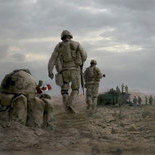
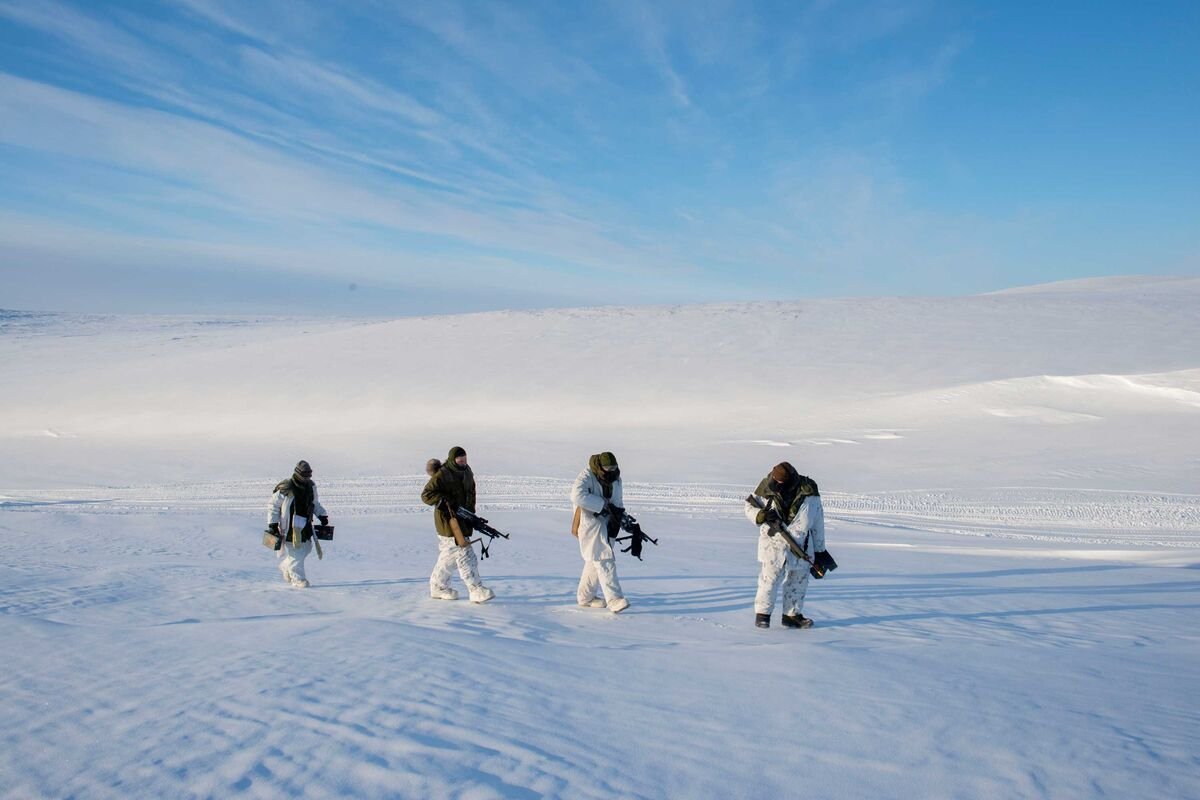
Bloomberg Canadian soldiers during a combat exercise near Resolute Bay, Nunavut, in March 2024. Photographer: Louie Palu/Agence VU Opinion Liam Denning, Columnist How Canada Is Defending the Place With No Dawn Liam Denning spent 10 days in the Arctic, where the Canadian military is preparing to safeguard its vast, unpopulated mineral-rich territory from emerging threats. July 29, 2024 at 5:00 AM EDT By Liam Denning Liam Denning is a Bloomberg Opinion columnist covering energy. A former banker, he edited the Wall Street Journal’s Heard on the Street column and wrote the Financial Times’s Lex column. This is the fifth in a series of articles looking at how climate change and geopolitics are reshaping the High North’s strategic landscape, from the military balance of power to the quest for oil and gas and mineral resources. Photography by Louie Palu. You can watch the video feature here. Standing on a thick layer of sea ice, with vague misgivings about the numbness spreading through my feet, I venture a churlish question to the Canadian infantry officer on whose snowmobile I hitched a ride to this remote spot in the High Arctic: “Why are you wearing green?” We’re waiting for the rest of his patrol in the middle of something like a frosted crater; the windchill is around negative 50F. It is a bright morning in early March in Resolute Bay, Nunavut, barely a thousand miles from the North Pole. Chief Warrant Officer Pierre Ouellet’s camouflage looks more suited to the tree line, the Arctic boundary several hundred miles south. White would be more discreet, surely? He answers: “We want to be seen.” That could be Canada’s unofficial Arctic motto. A year before, I was up a mountainside in Alaska with US Army troops training hurriedly for winter warfare. But the US is a continental superpower with an Arctic fringe. Canada, in contrast, is a middling power fringing an Arctic continent: an expanse of mainland and archipelago that makes up 40% of the country’s territory and 75% of its coastline but hosts less than 1% of the population. Ottawa has long fretted about foreign powers stealing in like squatters to some cavernous, virtually empty penthouse. That penthouse includes most of the North Atlantic Treaty Organization’s Arctic territory and acts as the de facto northern frontier of the US. Long a potential pathway for bombers and missiles in the skies, it also offers a potentially game-changing shipping route between the Pacific and Atlantic oceans — the fabled Northwest Passage. Beneath the permafrost and ever-less-icy waters lies a potential trove of mineral resources, including the building blocks of the energy transition. As climate change and a fracturing international order draw the world’s attention northward, I’ve come to Resolute Bay to watch the Canadian military grapple with the seemingly banal, but hugely complex and expensive, challenge of occupying its own territory and preparing for an emerging great game at the top of the world. Canadian soldiers with snowmobiles and sleds preparing to load into a CC-130 aircraft in blowing snow at Resolute Bay Airport, in March 2024.Photographer: Louie Palu/Agence VU Remote and isolated as it is, Resolute sits in the heart of Canada’s Arctic, making it a key logistical hub: the site of the Canadian Armed Forces Arctic Training Center, which includes the only runway this far north long enough to accommodate giant CC-177 cargo planes. It’s also home to the Polar Continental Shelf Program, supporting scientists in the field, including those involved with mapping out Canada’s entitlements on the Arctic seabed — a latter-day extension of the exploratory mission that gave the bay its name, derived from a British Royal Navy vessel sent in vain to find the doomed Franklin expedition to the Northwest Passage two centuries ago.1 Yet there is another reason Resolute Bay figures prominently in Canada’s effort to assert its sovereignty over its Arctic territory. The isolated hamlet on the bay, Resolute, dates from the 1950s and a dark chapter in the history of Canada’s treatment of the Arctic’s original masters, its Indigenous people. In that feverish early Cold War period, Ottawa coerced, or lured under false pretenses, more than 90 Inuit men, women and children to relocate from elsewhere to Resolute, on Cornwallis Island, and Grise Fiord, a settlement on nearby Ellesmere Island. This was done in part to — you guessed it — reinforce Canadian sovereignty in the Arctic. Ottawa issued a formal apology for the High Arctic relocation in 2010. A little way out of town near Resolute, a stone monument depicts a man looking toward Grise Fiord, where, about 240 miles northeast, stand a stone woman and child with a husky looking back, mute testament to the separation of families that took place. In that context, Resolute’s name in the Indigenous tongue of Inuktitut feels even more apt: Qausuittuq, the place with no dawn. Master Corporal Steve Aulaqiaq, a Canadian Ranger from the Inuit community of Qikiqtarjuaq, teaching igloo construction to non-Indigenous Canadian soldiers at Crystal City, near Resolute Bay, March 2024.Photographer: Louie Palu/Agence VU Yet embedded in that sad beginning also lies a prospective answer to the conundrum of how Canada can exert sovereignty over this harsh and seemingly limitless vista. In Resolute, I saw how Ottawa relies on a largely Indigenous contingent of Canadian Rangers to bolster its Arctic capabilities. Likewise, Ottawa’s commitment to the northern communities from which the Rangers hail, enhancing their resiliency in the face of climate change and other novel challenges, is critical to preserving their presence and the generational knowledge that it underpins. In that respect, Canada’s defense of its sovereignty in the Arctic ultimately rests as much on building a robust and inclusive national identity as it does on fielding a military fit for purpose. Its success in doing so can provide a model from which other Arctic countries, the US included, can learn. Canada’s Arctic Crossroads Resolute Bay sits at the center of Canada’s Arctic territory and sea lanes, about 1,000 miles from the North Pole Sources: Arctic Portal (Northwest Passage); Natural Earth A Desert Made of Water Resolute Bay lies in a polar desert. Stepping off the plane near the training center, a collection of low buildings resembling a moon base, I’m surprised to find myself coughing; the air catches in the throat like an icy dust. I flew in with members of the Royal 22e Régiment, the Canadian Army’s storied Francophone infantry regiment known as the Vandoos (vingt-deux, see?). Some recognize photojournalist Louie Palu, traveling with me, from when he was embedded with them in Afghanistan. For many, this is their first time so far north. A boat on the frozen shoreline of Resolute Bay, in March 2024.Photographer: Louie Palu/Agence VU There are a few short roads around Resolute Bay. Lined with poles and wires covered in a rime of frost like old sailing masts, one runs a mile or so north to a huddle of huts and tents named, with real estate mojo, Crystal City. Three miles south, the road heads into tiny Resolute itself, which has fewer than 200 residents. And that’s it. Cornwallis Island is a small patch of wilderness in Nunavut, the Canadian territory that stretches from Manitoba to the waters off northern Greenland. Averaging 0.05 people per square mile, it is a demographic near-vacuum. In my initial briefing, an officer warns: “If you’re lost in Nunavut and you yell, no one will hear you.” The grim echo of Ridley Scott’s Alien evokes a sense of having landed on a different planet altogether. Canada’s Giant, Lonely Arctic Arctic regions’ share of population and land area [graphic at link] Source: Econor Note: “Nordic countries” includes Greenland, an autonomous territory of Denmark. Greenland’s area excludes its ice cap. Click here to watch the video feature. Maybe that’s why the changing rooms, where you suit up for the outside, feel like an airlock. Besides the cold — the wind chill dips below negative 80F at one point during my visit — dehydration creeps up on you. As Captain Phil Simon, a surgeon and medical officer, tells me, “With every breath, you’re losing water.” Along with biology, medics stationed in Resolute Bay need a doctorate in flight schedules: Even a perfect medevac from here takes about 12 hours. A senior officer in the regional command says it was easier moving casualties from Afghanistan to Germany and then on to Canada than it is getting them out of here. Not to forget: Nanook. No short walk around the complex is complete without doing the occasional 360 to spy any polar bears. Nine are being tracked in the area when I arrive, and the safety tips on posters around the base tend to stoke, rather than allay, anxiety. A homemade effort I found pinned up in a broom closet resonated more: “What doesn’t kill you makes you stronger … except for bears…bears will kill you.” VIDEO: Learning to Fight in Canada's Arctic Territory General Wayne Eyre, who has just retired after serving as Canada’s Chief of the Defense Staff, fully acknowledges that no foreign army is coming over the ice today; if they did, he tells me, “the first capability we would send up is search and rescue.” He is instead looking a decade or two ahead, when more ice has melted and the postwar certainties of sacrosanct borders and free trade, coming apart already, potentially break down completely. In the face of such scenarios, Canada’s military suffers from what one might call diseconomies of scale. The army’s roughly 44,000 regular soldiers, spread across a country a little bigger than the US, would fit inside just one major US Army base, Fort Liberty in North Carolina. Joint Task Force North, responsible for Arctic operations, has around 1,600 personnel today. There is a lot of ground to cover, much of it extraordinarily rugged and lacking basic infrastructure. Corporal Nicolas Villemaire refueling a snowmobile at the Canadian Armed Forces Arctic Training Center in Resolute Bay, March 2024.Photographer: Louie Palu/Agence VU All-out war on the ice may be hard to imagine. But as Omond Solandt, the former head of the Canadian Defense Research Board, observed in 1948, not long before Resolute’s founding, “Everybody knows it’s impossible to fight a war in the Arctic, but we have to prepare for the man who doesn’t know it’s impossible.” So armies must imagine stuff anyway. Incursions by small, specialized forces, or drones — or “weather” balloons — are all too easy to imagine in such open space. As sea ice melts, shipping activity picks up. More than 140 vessels are expected to traverse the Northwest Passage this year. Besides offering another avenue for intrusion, each ship represents a potential search and rescue mission. The seemingly obvious draw is what lies beneath. Gold has been mined in Canada’s Arctic since the Yukon rush of the late 19th century. World-class deposits of uranium, diamonds, iron ore and copper have also been mined, and there are hopes to develop lithium and rare earth metals, too. Meanwhile, the US Geological Survey estimates that perhaps 20 billion barrels-equivalent or more of oil and gas lie beneath the Canadian Arctic. Beyond all this, in several senses, is the tantalizing prospect of one day sucking up rare earths and other minerals from the Arctic seabed. At a military conference in London recently, I heard a senior UK Royal Air Force officer almost casually refer to the seabeds and the poles as “the Klondikes of the 21st century.” Exploiting them is another matter. Besides extreme conditions, sheer remoteness and short working seasons make Arctic mining and drilling time-consuming and expensive. The giant Mary River iron ore mine on Baffin Island, for example, took roughly half a century from initial discovery to first production. For all their potential, Canada’s three Arctic territories lag significantly when it comes to investment in new projects. Canada’s Untapped Arctic Resource projects planned or under construction in Canada’s Arctic and other regions, split by type [graphic at link] Source: Natural Resources Canada 2023 inventory Note: Canadian Arctic comprises the Northwest Territories, Nunavut and Yukon. C$10 billion is about $7.22 billion. Climate change is touted as a catalyst for more. But sinking permafrost, less predictable sea ice and erratic weather patterns are less like the neat click of a long-sealed vault unlocking and more like the wayward swing of a wrecking ball. And yet, even if one knows all this, what if the other side thinks it knows otherwise? Most Klondike gold prospectors found nothing and nonetheless joined the rush. When it comes to imagined futures, the Arctic is not just a blank canvas but a shared one, too. In stretching to protect this region, Canada’s military is hampered not merely by the vast distances but also by its less-than-vast budget. An updated defense strategy — “Our North, Strong and Free” — promises more money, including funds for new Arctic installations and equipment. Announcing Eyre’s replacement General Jennie Carignan as the new Chief of the Defense Staff — the first woman to hold that position — Prime Minister Justin Trudeau noted that her appointment came amid “complicated geopolitics and increased threats, particularly to our Arctic.” Canadian soldiers on snowmobiles pass Crystal City, near Resolute Bay, March 2024.Photographer: Louie Palu/Agence VU Even the new budget remains below NATO’s current target of 2% of gross domestic product, however. Meanwhile, Defense Minister Bill Blair has spoken of the difficulty of convincing Canadians to raise spending further. As P. Whitney Lackenbauer, a professor at Trent University in Peterborough, Ontario, and a leading military historian, puts it: “Many Canadians still see the Arctic as a ‘there’ rather than a ‘here.’” One morning, somewhere in among the low hills near Resolute Bay, I watch reservists — wearing white this time — stage a mock attack on an encampment. They are, for all intents and purposes, capturing a patch of nothingness, blank white ground indistinguishable from the wider horizon. Tactical exercises here, as opposed to survival training, are relatively new for this regiment, reflecting the shifting geopolitical winds. For all the spent casings in the snow, and tactical camouflage, a strong element of psyops is at play. These soldiers are demonstrating to anyone watching, foreign or Canadian, that they can fulfill basic roles in a place that, given half a chance, will kill you without any human intervention. Yet they couldn’t do that were it not for a unique part of the Canadian military, one that ties it in a more profound way to this unforgiving land. Canadian soldiers preparing targets for a firing range near Resolute Bay, March 2024.Photographer: Louie Palu/Agence VU Ranger Time The secret to building an igloo is a spiral. You lay down blocks of hard-packed snow — “like sawing Styrofoam,” a sweating soldier tells me — in a ring and then cut a deep, slanted notch in one of them. That is the sloping start of the wall building up, round and round, higher and higher, to the apex. I am watching Master Corporal Steve Aulaqiaq, clad in a red parka, frost clinging to his mustache, as he slowly disappears, walling himself up inside a white dome. He is a Canadian Ranger. The Rangers, founded in 1947, are a part-time force numbering around 5,000, with about 1,500 of those in the Arctic, most of them Indigenous. They’re not combatants; they are the military’s eyes and ears in the emptier spaces of northern Canada, tasked with seeing something and saying something rather than shooting someone. Yet they are far more than that. They’re teachers, pathfinders, weather experts and, in this setting, even protection from bears. Corporal Anuga Michael from the Inuit community of Pangnirtung, in Crystal City, near Resolute Bay, March 2024.Photographer: Louie Palu/Agence VU That morning when I discussed camo with Ouellet, several Rangers were teaching a squad of Vandoos how to hunt seal and fish through the ice. Most of the Rangers hail from Arctic or sub-Arctic communities to the south. They aren’t superhuman; I see signs of frostnip, especially around the eyes, evidence of wind cutting against exposed skin on long snowmobile patrols. But the Rangers’ acclimatization sets them apart. While I fret about my feet getting frostbite despite triple-layered boots, one Ranger kneels on the ice, pulls off his gloves and reties a sled with bare hands. That sled, called a komatik, is itself a form of Indigenous technology. Wooden runners and cross-pieces are lashed together rather than nailed — an elegantly simple design that makes them sturdy yet with enough give to handle rough Arctic terrain. As a metaphor of the pragmatism and adaptability this place demands, they are hard to beat. The Rangers have a quiet presence. For all the incongruity of the Vandoos’ green camo, it’s the Rangers’ outfits that I’ll remember: seal-fur gloves, a bristling coat fashioned from nearly 10 beaver pelts, a striking green cap made from the skin of a harp seal. All stuff that is suited to, and of, this place. It is a tangible facet of the Rangers’ role as living links to the land, waters, animals and people of Canada’s Arctic. They carry generational knowledge of how to survive and thrive here. Master Corporal Kadin Cockney from Inuvik in the Northwest Territories, whose mother is a Ranger, describes a life that’s been defined by seasons of migratory hunting and fishing. Sergeant Noah Mosesee, who has been a Ranger on and off for 21 years, hails from Pangnirtung, or Pang, on Baffin Island and tells me proudly about teaching his youngest son to hunt caribou when he was just 3. Master Corporal Kadin Cockney (l) and Sergeant Noah Mosesee (r)Photographer: Louie Palu/Agence VU Highly trained as they are, the regular military would be lost out in this wilderness without the Rangers’ guidance. “Our Rangers are teaching the army experts. So who’s really the expert: the person who lives here or the person who came up for a visit?” says Sergeant Shawn Spencer, one of the Ranger Instructors who act as a critical link between the Rangers and the regular army. Ranger Instructor Warrant Officer Benjamin Marier (l) and Master Corporal Steve Aulaqiaq (r)Photographer: Louie Palu/Agence VU He characterizes the Rangers as “more organic” than the conventional military — a difference in culture but also a reflection of komatik-like adaptability. Like plans colliding with first contact, rigid army schedules don’t fare well where sudden blizzards chew up days and methodically preparing for the field, with its myriad challenges, takes precedence over a 9 a.m. deadline. “We call it ‘Ranger time,’” says Spencer. Canadian soldiers salvaging snow blocks to build walls around their tents in Crystal City, near Resolute Bay, March 2024.Photographer: Louie Palu/Agence VU To be sure, no meaningful military presence would be possible up here without aircraft, snowmobiles and other modern intrusions. But technology invites hubris. Night-vision goggles fail as batteries succumb to the cold. Condensation hampers automatic weapons (the Rangers use bolt-action rifles). Crashed aircraft are sprinkled across the Canadian Arctic like whale carcasses, melancholic monuments to nature’s final word. Canadian soldiers boarding a CC-130 aircraft at Resolute Bay Airport, March 2024.Photographer: Louie Palu/Agence VU Canadian and US military personnel survey the wreckage of a Royal Canadian Air Force CC-130 aircraft that crashed in 1991 near Alert, Nunavut, June 2016.Photographer: Louie Palu/ Agence VU The skills embodied and taught by the Rangers are vital adjuncts, and backup, to all that. Given that regular soldiers only rotate through the High North periodically (a challenge for the US Arctic effort, too), the Rangers also provide a thread of continuity. Lackenbauer, the historian, calls them a “unique Canadian solution to how to have a meaningful military presence in such a vast area with such a minimal conventional military.” In other words, non-combatants though they are, they punch well above their weight. There is an elegiac moment as Aulaqiaq, who joined the Rangers 50 years ago, begins igloo instruction. Blade in hand, he stands facing a semicircle of Vandoos. Beyond him is an Ozymandian snowscape dotted with the sunken shapes of collapsed old igloos that soldiers scavenge for ice blocks like stones from classical ruins. “This is how we used to live,” Aulaqiaq tells them. “But not anymore. It’s just a story.” As he works, he explains that, when he was a young man, if you couldn’t build an igloo, then you couldn’t get married. You had to be a literal homemaker. When he finally cuts his way out of the completed igloo and pulls himself up from the snow, he thrusts his arms up and shouts “Now I get married!” Everybody laughs. But as he said, the story has moved on. A raw, frozen Arctic char chopped into pieces by a Canadian Ranger for eating on the sea ice near Resolute Bay, March 2024.Photographer: Louie Palu/Agence VU The Hut at the End of the Earth One reason climate change can seem abstract is that it is often portrayed in numbers: temperature variances, ice thicknesses and so forth. When I speak with David Burgess, a research scientist with the Geographic Survey of Canada, he begins by talking instead about a hut. When scientists first began visiting uninhabited Meighen Island in the 1960s to measure its ice cap, flying in by ski-plane from Resolute Bay, they built a hut for shelter and storage. By 1975, the hut was covered by accumulated snow. So they built another one on top. By 2004, that one was covered, and a third was needed. It was the last. By 2008, the year oil prices hit their all-time peak, heavy thawing had begun. “The whole thing just melted right out and blew over in 2013,” Burgess says. We’ve entered the era of falling huts. Melting ice in the Arctic stokes adventurism and an oft-touted “scramble” for position. The verb is wrong — try scrambling when you have to get on five layers just to walk outside for five minutes — but the impulse is real enough. As the sea ice has thinned and retreated, the decades-long legal, scientific and, ultimately, diplomatic process whereby Arctic nations divide up economic rights on swaths of the polar seabed has heated up. A Canadian soldier crawls out of an igloo in Crystal City, near Resolute Bay, March 2024.Photographer: Louie Palu/Agence VU Canada has proposed its own boundaries, under United Nations auspices, which overlap with Russia’s and Denmark’s (via Greenland), as well as a little with those of the US. The scale can be hard to grasp. Canada’s offshore exclusive economic zone and proposed extended continental shelf add up to about 3.4 million square miles, almost as big as the country’s land area. Add renewing Canada’s aging navy to its list of priorities competing for dollars. Canada’s Arctic Rivals Proposed extended continental shelf boundaries of Arctic countries Canada US Russia Denmark Norway Sources: Natural Earth; Oceans and Law of the Sea; United Nations; US Department of State Besides hard choices on spending, addressing Canada’s Arctic conundrum requires more lateral thinking about its objectives and strengths. “We often associate sovereignty with lines on a map, but it’s best understood as everything that goes on within those lines,” says Lackenbauer. In the Canadian context, much of that internal dynamic revolves around the Indigenous peoples who live there and their relationship with Ottawa. This, too, is threatened by climate change. Glaciers are sources of water here, oases in the polar desert; their disappearance risks drought for those relying on them. Thinner, less predictable ice presents a hazard for snowmobiles. Burgess mentions a program called SmartICE, whereby sensors pulled by hunting parties track conditions and find the safest paths, like Waze for ice — ingenious if unfortunate in its necessity. Retreating sea ice also leaves coastlines more prone to erosion and violent storms. With the relationship to the land and sea so central to Indigenous ways of life, the changes now being wrought on the environment undermine the very foundations of these Arctic communities. Survival techniques based on centuries of hunting seasons and weather patterns face possible obsolescence. They are also at risk from sheer neglect. Elon Musk’s Starlink network has transformed internet access around Resolute Bay. I even see a telltale oblong antenna tucked behind a hut at Crystal City. While I am old enough to remember life long before instant messaging and streaming, the youngest recruits to the Canadian Army in 2024 will have been born in 2007, the year the iPhone debuted. They are wired differently. Several Rangers speak in subdued tones of the increasing difficulty in passing on traditional knowledge to younger generations distracted by devices or the lure of lives elsewhere brought to life on handheld screens. I heard similar concerns expressed last year by elders in the remote fishing villages of western Alaska. When I spoke with General Eyre just before his retirement, he envisaged the Rangers’ role in Arctic operations expanding but nonetheless also raised the need to “reevaluate our training model.” Whereas Ranger recruits are expected to arrive downloaded with the skills necessary to survive and thrive, that assumption may also be a casualty of change. Snowmobiles, komatiks and jerry cans with fuel are lined up by Canadian soldiers next to shipping containers at the Canadian Armed Forces Arctic Training Center in Resolute Bay, which is also hosting US soldiers for training, March 2024.Photographer: Louie Palu/Agence VU A phrase I hear several times around Resolute Bay is that “we are guests here,” referring to the non-Indigenous personnel. It seems an odd thing to say when the whole point of this exercise is to demonstrate that Cornwallis is as Canadian as Toronto or Vancouver. It also reflects an essential truth: Canada’s Arctic sovereignty is best understood not as a flag planted in the ice but as a more nuanced construct of overlapping circles or layers. Resolute bridges a history of blunt-force, colonial sovereignty and a more useful, modern relationship between Ottawa and the hinterland. The Rangers personify this on a military level. Meanwhile, the government of Nunavut, carved out as a separate territory 25 years ago, just gained authority over resource development there from the federal government. Even the North American Aerospace Defense Command, or Norad, which guards the skies and waters around Canada, Alaska and the Lower 48 states, is an exercise in pooled sovereignty, and a remarkable one at that. In terms of new military spending, an obvious priority is bolstering and replicating logistical and training centers like the one at Resolute Bay. Sovereignty demands, at a minimum, presence, or at least the capability to manifest it when needed. And up here, that in turn demands the refuge and connectivity such hubs provide. Beyond the military budget, however, spending on public services and civilian infrastructure is what makes sovereignty — in the sense of people actually living in a place — possible at all. Federal transfers to Nunavut of C$50,000 or so per person are higher than the per capita GDP of most countries. Even so, the region scores poorly relative to other Arctic regions in terms of life expectancy and, shockingly so, infant mortality. This represents more of a gap in defenses than a paucity of icebreakers. Canada’s Arctic Demographic Deficiency Demographic and economic indicators for Arctic regions, grouped by area [graphic at link] Source: Econor 2018 data Note: “Nordic countries” includes Greenland, an autonomous territory of Denmark. As much as today’s Arctic narratives revolve around climate change opening things up, it is best understood more tangibly as a force bearing down. The cost of maintaining communities on the polar edge will keep rising. Canada’s balancing act of shared sovereignty here is vital and must enlist a unified cast: military personnel like the Vandoos and Rangers, but also climate scientists, health-care providers, engineers and, wherever possible, industries to provide employment and revenue. The concept of total war is a familiar one, but preserving the Arctic requires something like total defense. For the place with no dawn to be defendable, it must first remain viable. A Canadian soldier walks through a valley near Resolute Bay, in February 2018.Photographer: Louie Palu/Agence VU More From This Series June 4, 2023 Read: Hiding an Army at the Top of the World June 4, 2023 Watch: A Look Inside the US Army Training Camp in Alaska July 10, 2023 Read: Drilling for Oil on the Moon July 10, 2023 Watch: Alaska’s Energy-shipping Advantage July 10, 2023 Watch: Mission to Deadhorse, Alaska July 14, 2023 Watch: What Native Alaskans Say About Drilling Oct. 22, 2023 Read: Red Alert for America’s Wild Arctic Fishery — With assistance from Elaine He This column does not necessarily reflect the opinion of the editorial board or Bloomberg LP and its owners. Liam Denning is a Bloomberg Opinion columnist covering energy. A former banker, he edited the Wall Street Journal’s Heard on the Street column and wrote the Financial Times’s Lex column. 1.Sir John Franklin’s expedition to explore sections of the Northwest Passage in two Royal Navy ships in 1845 met with disaster. Another ship sent to find Franklin and his crew, HMS Resolute, also became trapped in ice and was abandoned in 1854. Eventually recovered, some of its timbers were used to construct the Resolute desk that sits in the Oval Office to this day. View in article https://www.bloomberg.com/opinion/features/2024-07-29/as-arctic-race-heats-up-canada-struggles-to-defend-its-land-with-no-dawn
 1 point
 -
Have you ever been to one of their weddings?1 point
-
You're striking out on all fronts aren't you. You can't point to an authority saying he's done anything wrong and you can't even point to the laws you think may have been violated. So he didn't actually do anything wrong but U Mad because of your 'feels' , is that where we're at?1 point
-
I don't need to keep up. I am not asking you to spoon-feed me. You keep making baseless assertions. What I am asking you to do is support them with good arguments and facts. You seem completely incapable of those things...1 point
-
This is a question... it is not an argument or evidence of corruption. What anti-corruption law are you referencing here?1 point
-
There are no vaccines to do with covid, Sept. 10 2021 (go ahead and look it up) the CDC removed the definition of vaccine and replaced it with their rubbish.
 1 point
 -
How come MAGA types always try to invent their own reality? I find it very childish, like having an imaginary friend1 point
-
The topic is becoming as volatile as the one about covid vaccines. Too much "preaching"by both sides of the argument makes the actuall prob;em become mot a it is more "fun" to argue. As for the economic part of this, when only a small number of countries, and they are the ones least polluting, enforce significant economic burden on their citizen, it is an issue that is absolutely useless. While the climate problem is real, making life difficult by climate taxation on Canadians is laughable. i realize and understand your posts are main scientific but our governments fight is using economic weapons. Hard to listen to reason when my wallet is emptying.1 point
-
I'm entirely correct. That's what a "highly regulated" market is. You're literally saying i'm right without realizing it because you're too dumb to understand what you're talking about. The germans through regulation and by controlling what was purchased tightly controlled the market - and then allowed the market to function to derive the usual benefits of competition and innovation. This is essentially known as a 'state directed economy' - the market is in place but it is heavily directed by the gov't through various regulation and laws etc. You have a grade 8 understanding of this stuff which is hindering you. A highly regulated market is how market socialists exercise control over the economy and means of production without actually owning the means of production and squashing innovation or competition entirely. None of this is theoretical, it's well documented and market socialism is in practice today and has been discussed going all the way back to... well.. ww2. I get this can be a bit hard to learn about because the terms keep getting reused so what 'democratic socialism' is to one person may differ compared to another. Here - start here and actually READ something. This is just a primer to give you SOME ideas about the kinds of socialism out there but you'll at least have some sort of basic groundwork to build on. Types of socialism - Wikipedia The nazi's were socialists. It's right in their effing name. They just weren't the kind of socialist that believes the state should own the means of production, they wanted the state to CONTROL the means of production but to have the means of production owned in a market environment.1 point
-
Capital punishment? Hell man, we don't even vote them out of OFFICE!!!!! Let's start with THAT!1 point
-
Not at all: he did at the right moment, for the country and the party; by a brilliant move of a master of democratic politics, as opposed to a brainless; angry bag of hot lies that just can't stop spewing them out. And the howling and whining of the lying crowd is the best proof of that. They just don't have anything, zero zilch to say on the essence. They only had to stay with the reason and integrity. No one made them hand in their brains and honesty. "By their own choice: no reasons" this is how the history will remember them.1 point
-
Well who needed more evidence that a brainless mob can only create a lot of meaningless noise try to silence any sane voices and/or to suppress a few doubts that may be remaining? That hardly matters at this point. Sane people of reason and principle need to stand together now and stem the tide of insanity and lies. Then think long and hard how it can be fixed. There's a job to do and no one else will do it for us.1 point
-
Dude nobody takes you or your comments seriously. And if you look at how much atmosphere there is even a small percent of it being carbon means that there's an insane amount of carbon there, not a 'minscule amount'. 220,000,000,000,000 tonnes of the stuff. That's your 'minicule' amount. It takes craptonnes to sustain life. It's not particularly potent at all. The earth's atmostphere used to contain 200 times as much carbon as it does now. The stuff is not all that potent at all. Which brings us back to the question you can never seem to answer - why is this a crisis.1 point