
Moonbox
-
Posts
10,268 -
Joined
-
Last visited
-
Days Won
54
Content Type
Profiles
Forums
Events
Everything posted by Moonbox
-

Is it Conservative "greed" or are leftists unrealistic?
Moonbox replied to West's topic in Federal Politics in Canada
They do have corporate taxes. They just tax gross revenue instead of net revenue, and call them "gross receipt taxes". Next time you try to be smug, at least have a clue what you're talking about. ? Because it hugely overshot and didn't yield the results it was supposed to. Repealing +50% of it is hardly a tweak, either, lol. As for Trump, the fact that you tried to use his own dumb, counter-productive policies as explanations for why some of his other policies didn't yield results is pretty awkward. When you start focusing more on scoring points with things like dictionary definitions and other minutia, you're losing the debate. After numerous clarifications, you've still not offered any meaningful counter-argument to the easily demonstrable fact that income-splitting served no discernible policy objective beyond being a tax-break for higher-income families. FX is an underlying factor, and that's it. It's only relevant insofar as it affects government tax revenue. If you're going to make an argument for increased government spending and deficits, it should be based on what happened to tax revenue and employment rather than one their underlying causes. The problem for you is that federal government revenues rose substantially during the high-FX period you're referencing, and unemployment fell gradually throughout as well. Conversely, the reversal of the exchange rate in 2014 and beyond didn't translate in accelerated revenue growth for the government. https://www150.statcan.gc.ca/t1/tbl1/en/tv.action?pid=3610045001&pickMembers[0]=1.1&pickMembers[1]=2.2&cubeTimeFrame.startYear=2010&cubeTimeFrame.endYear=2020&referencePeriods=20100101%2C20200101 To summarize, this was an irrelevant topic in and not worth diving into. Not only do you not understand it very well in the first place, the conclusions and implications you draw from it were wrong anyways. ? but eyeballing a chart is pointless when we've already agreed (IIRC) that inflation and population adjusted numbers are the most accurate measurement. Your continued attempts to project your own identity politics on me is getting old. Considering I've already said Trudeau Sr and Jr are probably our two worst PM's ever, the idea that I'm arguing for my "Liberal buddies" is foolish. I've held up Mulroney (a Conservative) and Chretien/Martin (Liberals) of examples of real fiscal conservatives. I don't care what party they are. You clearly do, otherwise you wouldn't be talking about what happened before personal computers and cable television. Trudeaus were/are bad. Harper was less bad. Yay. Chretien made drastic budget cuts BECAUSE of economic hardship. 1/3 of federal revenues were going towards servicing Trudeau Sr's debt and Canada was headed for a fiscal death-spiral. Mulroney's GST and those budget cuts were the only thing that saved us. Back in the early 1990's, the prospect of a sovereign debt default in Canada was considered a very real possibility and hugely undermined confidence in the Canadian economy. Good for him. He did the right thing. Mulroney also did the right thing, even though it basically killed the PC party in Canada. Both are admirable. Harper having pushback is a lame excuse. Stimulus spending during a recession is one thing, but structural increases to public spending and the size of government despite 4 years of majority well-beyond the recession is another. Again, you seem to think that I hate Harper. I don't. I would rather he was still PM than what we have now. I just found him disappointing and don't think he left us better off than when he started. Acceptable? I don't really think any of it is acceptable. I think our public service is already bloated and overpaid and that's mostly the fault of Trudeau Sr (and now his son). An almost 11% increase on an already bloated federal public service is both unwelcome and unnecessary. Mulroney and Chretien had us on the right path and then we reversed under Harper and now are torpedoing ourselves under Trudeau.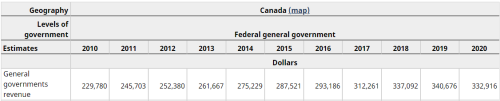
-
Capital Gains Tax on Primary Residences
Moonbox replied to ExFlyer's topic in Federal Politics in Canada
Material and construction costs are not responsible for more than a small percentage of overall cost. Michael is right that speculation and inflated demand are the real issue, but solving it requires tackling the disparity of supply/demand from both sides. Predatory/risking speculating and overly-accommodative monetary policy are key things that should be (and look to be) getting addressed, but then a lack of affordable supply promotes the environment where this sort of speculation thrives as well. Developers will start steering away from more expensive higher-margin developments if municipalities and other levels of government focus on promoting affordable, sustainable housing growth. -
Capital Gains Tax on Primary Residences
Moonbox replied to ExFlyer's topic in Federal Politics in Canada
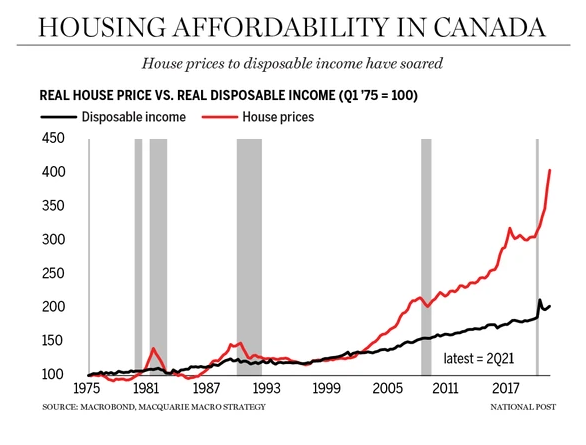
What does thin ice mean in this case? Housing supply isn't something that can be solved in a year or two. As I mentioned earlier, large rental projects can take over three years to complete from zoning/land purchase to completion. For a demographic issue like housing, you want to be using an average. Regardless, real-estate speculation and skyrocketing prices have been a problem for longer than 10 years. Affordability has been getting worse and worse and probably only really collapsed in 2016-2017 and beyond, but this isn't something that jumped out of the woodwork on us. I don't know the exact numbers, but from what I recall both Canada and to an even greater extent Ontario have technically increased housing builds compared to population over the last 5 years, but not to the extent that it substantially reduces the existing shortfalls. All countries are not seeing the same problem. Canada and to a lesser extent the UK and the US are, but asking what's causing the problem is precisely what we're doing. What do you even mean by this? Housing prices were detaching from Canada's wage growth even 10 years ago when I still worked at a bank. https://nationalpost.com/news/canada/canadas-unhinged-housing-market-captured-in-one-chart Basically nobody (outside of realtor boards/associations) is arguing that overheated demand and bonkers speculation isn't fueling housing prices today. Mathematically the disparity in supply and demand cannot explain price growth like we're showing above. https://www.scotiabank.com/ca/en/about/economics/economics-publications/post.other-publications.housing.housing-note.housing-note--april-4--2021-.html “Speculative activity is the issue of most concern, and any immediate policy actions should be limited to reducing speculation,” Perrault said. The government could, for example, consider taxing sellers who buy a home only to sell it again quickly. https://thoughtleadership.rbc.com/hot-canadian-housing-markets-call-for-a-policy-response/?utm_medium=email&utm_source=salesforce&utm_campaign=housing Policymakers should look at a range of options to discourage speculative activity as this could generate further volatility. We find New Zealand’s just-announced phasing-out of mortgage interest expense tax-deductibility for investors an interesting proposal. How best to address the problem is what the real question is. Central bank policy (rising interest rates) will no doubt have an impact, along with recent budgetary measures targeting speculation. These all help curb inflated demand, but we're still short on housing. Worse is that we're short on the right kind of housing and in the right places. Upzoning middle/lower class neighborhoods in Toronto to build pocket-mansions or luxury condos or building higher-class 1-bedroom apartment buildings (popular with speculators) can boost housing completion numbers, but they're not actually improving supply for struggling middle-class or lower-income families.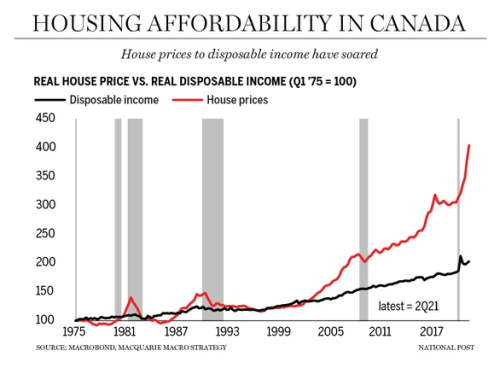
-
Capital Gains Tax on Primary Residences
Moonbox replied to ExFlyer's topic in Federal Politics in Canada
That's not really cherry-picking. They're acknowledging it's not a straight apples-to-apples comparison, but doesn't account for the difference in overall stock. I don't think this really matters, does it? That the UK and the US have their own housing problems doesn't minimize our own. Our problems are also very regional, with Ontario especially (and some of the other provinces) dragging our national average down. The article explains that even if we could address these acute provincial shortages and bring them in line with the current national average, we'd still only be equal to the UK and the US. Not deceptive. The biggest and most impactful projects on overall housing availability are larger high density projects which can take years to complete from start to finish. The housing problems in Canada are hardly new and have been a problem for at least 10 years. There are encouraging signs, however. Housing starts are running well above pre-pandemic levels, though that pace of construction, if sustained, is unlikely to meaningfully close the gap between supply and demand anytime soon given the size of the gap to be closed, and an expectation of strong immigration growth in coming years. Demographics, probably. I don't really understand your numbers or your source entirely, but I think you overestimate how biased Scotiabank is on this. Regardless, we can find other sources saying the same thing. Here's a video from Ernst and Young on bloomberg that I watched recently, so unless you figure the accounting industry is also biased then maybe we can accept his impartiality. https://www.bnnbloomberg.ca/real-estate/video/ottawa-must-focus-less-on-demand-more-on-supply-tax-expert-on-housing-affordability~2415563 -
Is it Conservative "greed" or are leftists unrealistic?
Moonbox replied to West's topic in Federal Politics in Canada
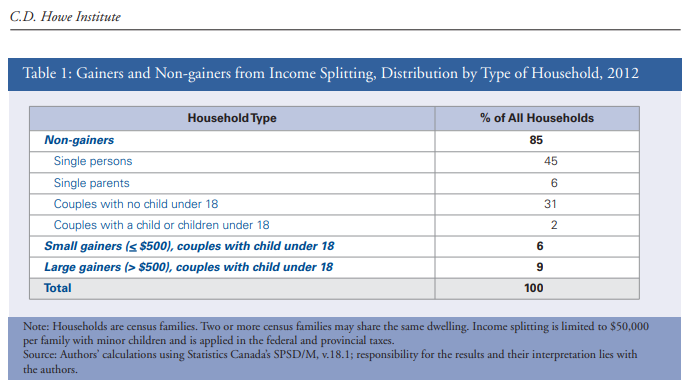
No, because half of those states have an alternative tax, which I already talked about. It's really just Wyoming and South Dakota. Okay. Sure. If we're being semantic then I withdraw "total failure" and leave it at "failure". ? No, I didn't. Okay. I see. I need to be really, really careful with semantics around you. I said the tax cut was purely for high income earners. Purely was for emphasis, but I can understand how you saw it otherwise. The tax cuts did sweet FA for lower earners and most dual income earners, and absolutely nothing for the overwhelming majority (85%) of households, as illustrated by the CD Howe study I posted. This was therefore a purely effectively a targeted tax cut for higher earners, and though I hope you found this clarification helpful, it really doesn't have any effect on the overall conclusion. It was not a helpful, equitable or useful policy initiative. Who cares? The FX rate is not the tax base, which continued to expand in real terms (inflation adjusted) despite the high Canadian dollar. Economists have been warning of lower GDP growth for 20 years now and that's more a demographic than foreign exchange problem, and governments will have to deal with it well into the future. The high Canadian dollar did not cause Canada's tax revenue base to plummet, therefore it cannot be used to excuse increased spending. He didn't. A high Canadian dollar is not economic hardship. As you alluded to early, it's actually a signal of relative economic strength, though there's way more that goes into this topic than what we've discussed so far. Which isn't true. Chretien/Martin's increases to spending were basically 0, inflation-adjusted by person (which I believe we agreed was the best measurement). Under Harper, they increased by almost 11%. Per-person spending when Chretien took office: $6995 Per-person spending when Harper took office: $6992 Per-person spending under Harper in 2014: $7740 So to summarize: Chretien/Martin = 0% increase to spending Harper = 10-11% increase to spending There you go. You touched on the relevant point there. You're highlighting correlation, not cause. Chretien surpluses were a combination of austerity in the early years followed by a strong economy. Did a low dollar help? For exports, sure. For other stuff? No. Overall, it likely helped especially in the short term, but it caused problems too and it's one of the reasons that Canadian productivity continues to fall behind the USA's. If you want to talk about financial hardship, the Chretien Liberals had debt servicing payments that amounted to something close to 1/3 of federal revenues when they took over, yet they still cut spending and relied on Mulroney tax hikes to pull them out from the brink. Yes. That's the sort of government I'm looking for, not cynical pretenders like Harper, and so the Liberal vs Conservative reputations mean squat. If it were just the poorly-implemented tax cuts, or just the extra program spending, I'd look back at Harper more favorably. As it stands, he was hardly the paragon you guys make him out to be. Better than Trudeau though? That goes without saying. -
Just like his father, Justin is happy to spend as much of other people's money as required to stay in the PM's chair.
-
This sort of juvenile rhetoric and hyperbole is exactly why nobody takes you guys seriously. The vileness of the "Left"... ? I couldn't come up with more cringeworthy posts if I tried. I should make another account just to roleplay this sort of farcical nonsense. You clowns would eat it up.
-
Capital Gains Tax on Primary Residences
Moonbox replied to ExFlyer's topic in Federal Politics in Canada
The limited supply is what fuels the speculation, and although they're not "separate problems" I think we're better off focusing on the underlying drivers instead of the effect. Treat the illness rather than the symptoms, so to speak. I mostly agree with you and these sources are probably not the best. I've very little faith or regard for the realtor profession in general. That aside, let's make an economic argument then. https://www.scotiabank.com/ca/en/about/economics/economics-publications/post.other-publications.housing.housing-note.housing-note--january-12-2022-.html Canada’s population-adjusted housing stock is the lowest in the G7. Ontario would require over 650,000 homes for its ratio of dwellings to population to equal that in the rest of the country. Review those two facts in tandem. First, Canada (on average) has the lowest G7 housing stock. Second, Ontario needs 650,000 new homes even to meet that low bar. The math is unfortunately not so simple. Factors like vacancies (especially disparities by market), vacation properties and rentals, demand for housing will always exceed simple household demand. We can try to regulate/tax/discourage speculative housing demand, and that will help, but the most effective way to end this is find an equilibrium in the supply/demand curve where risky, highly-leveraged speculation is no longer profitable. The interest rates rising should help, but supply will be what ultimately solves this problem. -
Hyperbole aside, I'm also cringing waiting for this budget to drop.
-
Westcanman's summation is the same inane nonsense as your own. Anyone who disagrees with you is considered "the left" from what I can tell, which is stupid at face-value.
-
Capital Gains Tax on Primary Residences
Moonbox replied to ExFlyer's topic in Federal Politics in Canada
Speculators (especially foreign ones) are just the most visible and objectionable part of the problem. Supply not matching demand/population growth is another, as are the rise in short-term rentals vs hotels, along with overly-accommodative interest rates and mortgage rules. but we aren't. https://www.theglobeandmail.com/real-estate/adv/article-are-we-building-enough-homes-the-short-answer-is-no/ “The principal challenge facing the housing market – and the underlying cause for rising prices and diminished affordability – is the substantial insufficiency of supply relative to demand,” the Scotiabank report says. Lee says a study by the CHBA in 2017 estimated that over the coming decade the country would be 300,000 family units short. https://ca.finance.yahoo.com/news/record-construction-not-enough-to-meet-canadian-real-estate-demand-rbc-173345583.html Construction also isn't keeping up with population growth. Hogue says the 215,000 new units in the past 12 months fall short of the 220,000 average yearly increase in Canadian households in the four years before the pandemic. -
You don't trust anyone who doesn't just repeat your nonsense back to you. Your "trust" couldn't be less worthless.
-
Of course I do. The guy is a total moron and usually full of shit. If you can attack a wide, vague and generally framed group of people as "vile" based on the actions of one unidentified person, how do you take issue with my singling out one person who's so clearly and obviously a complete donkey? ? This exchange here is mind-bogglingly dumb: with dialamah pointing out your hypocrisy and complete obliviousness regarding "attacks" and then you follow up with exactly what she's talking about. Wowwww.
-
Is it Conservative "greed" or are leftists unrealistic?
Moonbox replied to West's topic in Federal Politics in Canada
Agreed, but Canada's corporate taxes were already much lower than the USA's when Harper dropped them. ? aside from Wyoming and one or two other backwaters, they all have some sort of business tax or another. The gross-receipt tax in Texas, for example, is even more business-unfriendly than corporate taxes. "LOTS of them" is vague enough to not really mean anything. They are talking about more than halving the reduction from 34% to 21% to meet in the middle at around 28%. The TCJA was also complicated enough in the minutiae that individuals and businesses were confused and whoever adjusts it will have their work cut out separating the good from the bad. They almost certainly did have an effect, but I'd propose they were just one of many examples of Trump's dufus economic policy rather than a way to explain why massive tax cuts for an already booming economy didn't yield results. This was 9+ years into an expansionary cycle when unemployment was already low and deficits were high. Whatever future benefits we may or may not see from will have to be weighed against future debt problems, and the wisdom of fiscal stimulus near the top/end of the economic cycle was dubious, at best. Citation for what? That the max benefit was only $2000 and that you could only get it if you earned $100,000 or more? Since the max you could split was $50,000, this is basic math. I provided a fairly detailed citation already, so if you can clarify what your actual contention is I'm happy to oblige. You were telling us earlier that it benefited every household with married or common-law couples, so now we're changing the goal-posts...got it. Regardless, you're touching on the crux of the matter, which is that this was a targeted tax cut mostly for wealthier nuclear families with children and only 9% of households received significant benefit with another ~6% of households getting less than $500. The other 85% got nothing. As a policy measure it was arbitrary, didn't promote anything useful, and was clearly far from fair. Like I said, why are we adding this item? If your underlying argument is that there were economic challenges to excuse Harper increasing the size of government, and for the sake of the debate I already conceded there were economic challenges, why are we branching out further and digging into the underlying causes? What's actually important is what happened to GDP and the tax base, rather than the underlying reasons for it. Adding FX makes an already tedious debate more expansive and exhausting, but maybe that was your aim? nobody is arguing that FX doesn't affect exports, but there's always a trade-off. A low exchange rate can also hurt by contributing to inflation (and potentially higher interest rates), discouraging capital expenditure (thus lowering long-term productivity growth) among a great many other things. There was nothing anomalous about reducing deficits via higher taxes and reduced spending, which was the opposite of what we saw from Harper. ? You can try to make excuses for it, but long-term proportional increases to program expenditure (not just temporary stimulus) cannot be explained by slower economic growth or a recession from which Canada had emerged 5-6 years before Harper left office. Chretien/Martin and even Mulroney were the examples of governments doing the needful, rather than the cynical/wantful, and we should hold them up as examples of fiscal stewardship rather than Stephen Harper. Even so, he's still way better than Trudeau (Sr or Jr). -
Is that what you got from my post??? ? So no, I didn't not say that, nor do I think that. Calling the police with fake threats is always bad, no matter who does it. The problem with Stew Peters is that he's a caustic moron with zero credibility and a long list of enemies. What he claims happened on Twitter or wherever is as likely as not untrue given his long history of make-believe, and even if it isn't completely made up or exaggerated bullshit, we have no idea who made the call and therefore can't really say much about their motivations. Your imbecilic thread is therefore just another example of your thread-vomit and the conclusion you draw in it are foolish.
-
You can be excluded from cultural events, restaurants and movies or have your job taken away by the clothing you choose to wear (or not wear). Somehow that didn't make us fascist so I'm not sure why a vaccine mandate would, other than your delusions about about its purpose and efficacy.
-
actually no. Even a wiki page is better than nothing ? Either way, I have to hand it to you on delivering another brilliant example of your keyboard-diarrhea post-spam. Calling in false-threats to the police is obviously vile, but Stew Peters is a vicious idiot and has made enemies everywhere, on the right and on the left. His wife, of all people, has called the police on him in the past, and that's not the beginning or the end of his run-ins with the law. This guy is Alex Jones style unhinged and only differs in that he dresses nicer and has fewer apoplectic fits during his shows. Here's some headlines from Stew Peters' show: Demonic Pedophiles Target Kids: Government Ad Promotes Pedophilia, Transgenderism & Vaxx On Kid Klaus Schwab's Social Contract: Vaccinate, Dominate, Crush & Exterminate "Useless Eaters" Alabama's Baptist Auschwitz: Hospital Killings: Death Cult Covid Carnage Continues The guy is literally a walking profile in stupidity, and the possibility that he lied about being SWAT'd shouldn't be discounted either. It could be true or it could not be, but Stew Peter's is exactly the type of person who'd make it up.
-
Capital Gains Tax on Primary Residences
Moonbox replied to ExFlyer's topic in Federal Politics in Canada
You're probably right but I don't think it will go through. This would be enough to get everyone to abandon the Liberals en masse and vote for literally anyone else. -
Capital Gains Tax on Primary Residences
Moonbox replied to ExFlyer's topic in Federal Politics in Canada
It's possible depending on what happens in the economy, but the problem is our population is growing and we're not expanding housing. Interest rates rising could crash the market if it's done too quickly, but as long as there is an imbalance on population growth and housing growth in the places people want to live, the market is going to remain ugly. -
Capital Gains Tax on Primary Residences
Moonbox replied to ExFlyer's topic in Federal Politics in Canada
Capital gains taxes aren't the solution here. The solution is to encourage housing affordable housing development and discourage real-estate speculation. As a matter of public policy the priority should be on promoting housing for younger working people and families, and less on maintaining absurd price values for real-estate speculators. The problem is that as a voting issue, there are too many people sitting on fat nest-eggs and their votes will discourage any serious policy against it. That's why municipalities continue to block large real-estate development with red-tape and why mortgage rules and tax adjustments are never seriously considered. -
That's what happened to virtually all of the other lawsuits that came before the Courts.
-
Whatever legitimate arguments you may or may not have about Trudeau's policies are drowned out by the mountains of dumb hyperbole and exaggerated nonsense. I've been anti-Trudeau on this forum for longer than you've been posting here. I'm just also very anti conspiracy-clown.
-
Is it Conservative "greed" or are leftists unrealistic?
Moonbox replied to West's topic in Federal Politics in Canada
I understand what it means. That's why I called it tax arbitrage, or in the case of Tim Horton's merging with Burger King and moving to Canada, tax inversion. It's a tax loophole and nothing more and that's why there have been concerted efforts from global policy makers to end/discourage offshore profit shifting. Regardless, the reality is that corporate tax cuts have diminishing returns past a certain point. Despite your claims to the contrary, this is a self-evident truth. If it weren't the case, why aren't we seeing 0.5% corporate tax rates? Surely if they convince people to base their companies in Canada, we'd benefit, right? ? You'll never find any shortage of writers from right-leaning think-tanks promoting tax cuts. As far as this article goes, the arguments made are pretty limp. He's saying that Trump's tax cuts weren't a failure because: a) Biden isn't reversing all of them and b) The full effects of the cuts were maybe disguised by all of the other dumb shit Trump did. Dude, don't make up arguments for me. The companies that take advantage of bad tax policy and rules are doing what's right for them, and nobody should blame them for it. It's pretty clear you don't have a clue how it worked, or at least that you haven't actually considered the implications. The maximum benefit was a $2000 tax-credit and that only applied to families with one spouse earning at least $100,000 being able to shift $50,000 to the other. Given that only ~15% of the population earns over $100k/year and that only families with kids under 18 benefited, this was a very small percentage of the population getting the max benefit. You also have to consider how bracketed income taxes work and that often two spouses earning different amounts each year could barely benefit from the plan simply because shifting even a significant portion of income to your spouse didn't bring you down to a lower marginal rate. If you actually give a shit, read this: https://www.cdhowe.org/sites/default/files/attachments/research_papers/mixed/Commentary_335.pdf Your faux-expertise is hardly "complex". If it actually mattered for the debate we could really dive into it and I could show you how completely inadequate your arguments and/or understanding of the FX issue really is. For the purpose of this debate, however, all that really matters is that the economy faced challenges, as you say. Diving into all of the reasons why is a pointless red-herring. but Harper never did pull it back, despite having half a decade do so post-recession. Great job.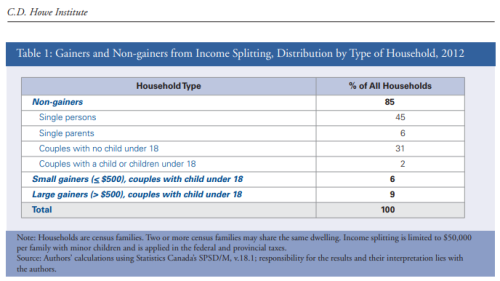
-
Nothing you expouse here is moderate or conservative. It's clown world fantasy make-believe and worthy of little more than mockery or, better yet, outright dismissal.
-
No well-informed or sane person believes the things that you do. We can talk about government overreach and even agree on many of those issues, but as soon as the conspiracy clown-parade starts throwing around their hyperbole, nobody cares or listens anymore. Any chance for a reasonable fact-based discussion is over and we're left with nothing but a bunch of adult-babies yelling angrily amongst one another. The worst part is that your exaggerated, emotional hyperbole accomplishes nothing (except maybe catharsis) other than to shore up support for everything you're raving against. Sleepy Joe Biden would have lost the election in the USA against even a somewhat rational opponent and Justin Trudeau would likely have lost too if not for the fact that the election very much became a referendum on vaccines and pandemic responses vs the ignorance and melodrama of Canada's goofy far-right.