
blackbird
-
Posts
11,721 -
Joined
-
Last visited
-
Days Won
9
Content Type
Profiles
Forums
Events
Everything posted by blackbird
-
You are hiding behind some phony claim that somehow a Hebrew, covenantal argument means something different than the plain command. It is clear in English. We don't need the Hebrew. Just because the word tattoo is not used in the New Testament doesn't mean it is acceptable to be tattooed. We are to be holy and holiness doesn't include marking the body up with tattoos. It's the same reason we shouldn't put rings in our noses or other heathen practices that savages in the jungle do. Our goal should be to say like Paul, "Be imitators of me, as I am of Christ" (1 Corinthians 11:1).
-
You think posting tons of comments in giant, bold letters makes it more legitimate? No way. It proves you don't have a good argument.
-

Conservative Leadership Race
blackbird replied to Queenmandy85's topic in Federal Politics in Canada
That is not a viable replacement for fossil fuels for many reasons. The world is geared to using cars, trucks, ships, and planes that burn gas or oil. People in Canada who think they can force the rest of the world to buy EVs are deluded. They are far more expensive and the rest of the world is not set up to even charge them. Plus they have no desire to change to EVs. Canada does not control the rest of the world. So what is the use of going on about it? -
Conservative Leadership Race
blackbird replied to Queenmandy85's topic in Federal Politics in Canada
I am honest. I don't believe in the man-made climate change scam. There is no viable replacement for fossil fuels. You still don't understand the real world. -
Conservative Leadership Race
blackbird replied to Queenmandy85's topic in Federal Politics in Canada
That's not me you quoted. You are obsessed with your heathenism. -
That's life. Wishful thinking can't change the world.
-
Conservative Leadership Race
blackbird replied to Queenmandy85's topic in Federal Politics in Canada
You bought an EV. So. -
Conservative Leadership Race
blackbird replied to Queenmandy85's topic in Federal Politics in Canada
Notice Eyeball only makes nonsensical one or two sentence comments. He is not a deep thinker at all. He can only recite the enviro lefty one liners that he believes are absolute truth. Or he just uses the one liners to troll on here. I doubt he is really engaged in serious discussion of anything and probably doesn't really read your comments. Much like EX Flyboy who only knows how to post red down arrows all the time. -
You are over simplifying it. Your quoting the above and approving of anything shows you have no idea what we are even talking about. How one dresses does in fact send a message. But what kind of message does it send? You never mentioned the fact that the Bible does speak about appearance. The Apostle Paul wrote about it in 1 Corinthians 11. " 3 But I would have you know, that the head of every man is Christ; and the head of the woman is the man; and the head of Christ is God. 4 Every man praying or prophesying, having his head covered, dishonoureth his head. 5 But every woman that prayeth or prophesieth with her head uncovered dishonoureth her head: for that is even all one as if she were shaven. 6 For if the woman be not covered, let her also be shorn: but if it be a shame for a woman to be shorn or shaven, let her be covered. 7 For a man indeed ought not to cover his head, forasmuch as he is the image and glory of God: but the woman is the glory of the man. 8 For the man is not of the woman; but the woman of the man. 9 Neither was the man created for the woman; but the woman for the man. 10 For this cause ought the woman to have power on her head because of the angels. {power: that is a covering in sign that she is under the power of her husband} 11 Nevertheless neither is the man without the woman, neither the woman without the man, in the Lord. 12 For as the woman is of the man, even so is the man also by the woman; but all things of God. 13 Judge in yourselves: is it comely that a woman pray unto God uncovered? 14 Doth not even nature itself teach you, that, if a man have long hair, it is a shame unto him? 15 But if a woman have long hair, it is a glory to her: for her hair is given her for a covering. {covering: or, veil} 16 But if any man seem to be contentious, we have no such custom, neither the churches of God. " 1 Corinthians 11:3-16 KJV " 1 Peter 3:3-4 “Your beauty should not come from outward adornment, such as elaborate hairstyles and the wearing of gold jewelry or fine clothes. Rather, it should be that of your inner self, the unfading beauty of a gentle and quiet spirit, which is of great worth in God’s sight.” – 1 Peter 3:3-4 Proverbs 31:30 “Charm is deceptive, and beauty is fleeting; but a woman who fears the LORD is to be praised.” – Proverbs 31:30 Galatians 5:22-23 “But the fruit of the Spirit is love, joy, peace, forbearance, kindness, goodness, faithfulness, gentleness and self-control. Against such things, there is no law.” – Galatians 5:22-23 1 Timothy 2:9-10 “I also want the women to dress modestly, with decency and propriety, adorning themselves, not with elaborate hairstyles or gold or pearls or expensive clothes, but with good deeds, appropriate for women who profess to worship God.” – 1 Timothy 2:9-10 So contrary to what you posted, there are admonitions in the Bible about how Christians should dress. Decency and propriety is a key as it says in 1 Timothy 2:9-10. While those verses are referring to women, it is implied that decency also applies to men. Decorating one's self with tattoos certainly is not something that Christians should do. That should be obvious.
-
No I don't agree. The Bible is full of teachings that a Christian (Bible believer) is a new creature in Christ. Holiness is a central part of sanctification or growing in holiness. We are to seek holiness in our lives, not put on worldly images such as tattooing our bodies. "In 1 Peter 1:16 we read, "You shall be holy, for I am holy." What is holiness? How can we be holy? The word translated "holiness" in the New Testament means to be "set apart." In the Old Testament, holiness was generally connected with God's perfection. How can we be set apart and perfect? All people have sinned (Romans 3:23) and are imperfect. Our only option to be set apart is through the salvation offered through Jesus Christ (John 3:16; Romans 10:9; Ephesians 2:8-9). When we believe in Jesus as Lord, He cleanses us from sin and makes us holy (1 John 1:7). Theologians often refer to this concept as positional sanctification. First Peter 2:9 speaks of this new status as well: "But you are a chosen race, a royal priesthood, a holy nation, a people for his own possession, that you may proclaim the excellencies of him who called you out of darkness into his marvelous light." God calls us holy even though we still commit sins during this life. In addition to being "made" holy, we are called to live holy lives. First Peter 1:15 teaches, "As he who called you is holy, you also be holy in all your conduct." The previous verse adds, "As obedient children, do not be conformed to the passions of your former ignorance" (v. 14). We are commanded to avoid the ways we practiced before becoming a Christian and live according to God's ways. We can only do this by living by the power of God's Spirit, following the principles found in God's Word. Theologians refer to this daily practice of living for God to become more holy as progressive sanctification. As we seek to follow God's will each day, we can increasingly become holy as we become more like Christ. Our goal should be to say like Paul, "Be imitators of me, as I am of Christ" (1 Corinthians 11:1). Regardless of the progress we make to become more holy in this life, we will never be perfect. We will still sin at times, as Paul wrote in Romans 7:18-19, "For I have the desire to do what is right, but not the ability to carry it out. For I do not do the good I want, but the evil I do not want is what I keep on doing." It will only be in heaven that all sin will be removed from our lives and we are made perfect. Theologians refer to this as perfective sanctification. These three concepts can be very helpful in our daily walk with God. When we are saved, we are made holy. In addition, we are called to obey God and grow in holy living each day. Though we will never be perfect in this life, God can and will work in our lives to help us better live for Him. After this life, we can anticipate a perfect, eternal existence with God in which we no longer sin and are made perfectly holy, living in the presence of God forever." What is holiness according to the Bible? How can I be holy? - Compelling Truth Tattoos portray the wrong image for someone who is striving to serve God in his/her life. Instead of marking our bodies with pictures and ornaments, we are to put on Christ and grow in holy living each day.
-
Conservative Leadership Race
blackbird replied to Queenmandy85's topic in Federal Politics in Canada
I am speaking about the whole world in general. I met a guy the other day that bought a hybrid car but it cost him $78,000. That is one huge pile of money. Plus he bought a ten year warranty to protect his hybrid from battery or engine failures, etc. That would have cost thousands of dollars on top of the $78,000. So it was probably well into the 80 thousands. That was only a car. You can get a good gas car for a fraction of that price. The truth is the average person can't afford to spend that kind of money to buy an EV. They are much more expensive than gas vehicles. Sure you saw somebody that owned one. But most of the world is struggling to keep a roof over their head and feed their family. That's the real world. So the hundreds of millions of people in the world can't afford to go out and buy an EV. In addition there are millions of trucks, ships, and aircraft that are used for commercial work and industry. These use gas or oil to run and can't be replaced by EVs easily or economically. The world runs on oil for all kinds of things. That will be the case for decades to come. We don't live in an imaginary world. We have to be practical. How do you explain that? -
Conservative Leadership Race
blackbird replied to Queenmandy85's topic in Federal Politics in Canada
There is no replacement for fossil fuels. That's reality. -
Conservative Leadership Race
blackbird replied to Queenmandy85's topic in Federal Politics in Canada
Reactors produce electricity. They don't replace fossil fuels for vehicles ships and planes. We also need oil for manufacturing and many things. -
My post certainly does. It depends how you think of it. I would say the following reason to not get tattoos is one of the most important reasons: ① Body as God’s Temple Our bodies are sacred. Why does this matter? Scripture calls them temples of the Holy Spirit. Tattooing may be seen as altering God’s creation. I believe honoring our bodies means keeping them as God designed. Avoiding tattoos respects this principle. 1. Preserves body’s natural state. 2. Honors God’s design. 3. Reflects spiritual stewardship. Bible Verse: “Do you not know that your body is a temple of the Holy Spirit within you, whom you have from God?” – 1 Corinthians 6:19 Tattoos are not a good witness.
-
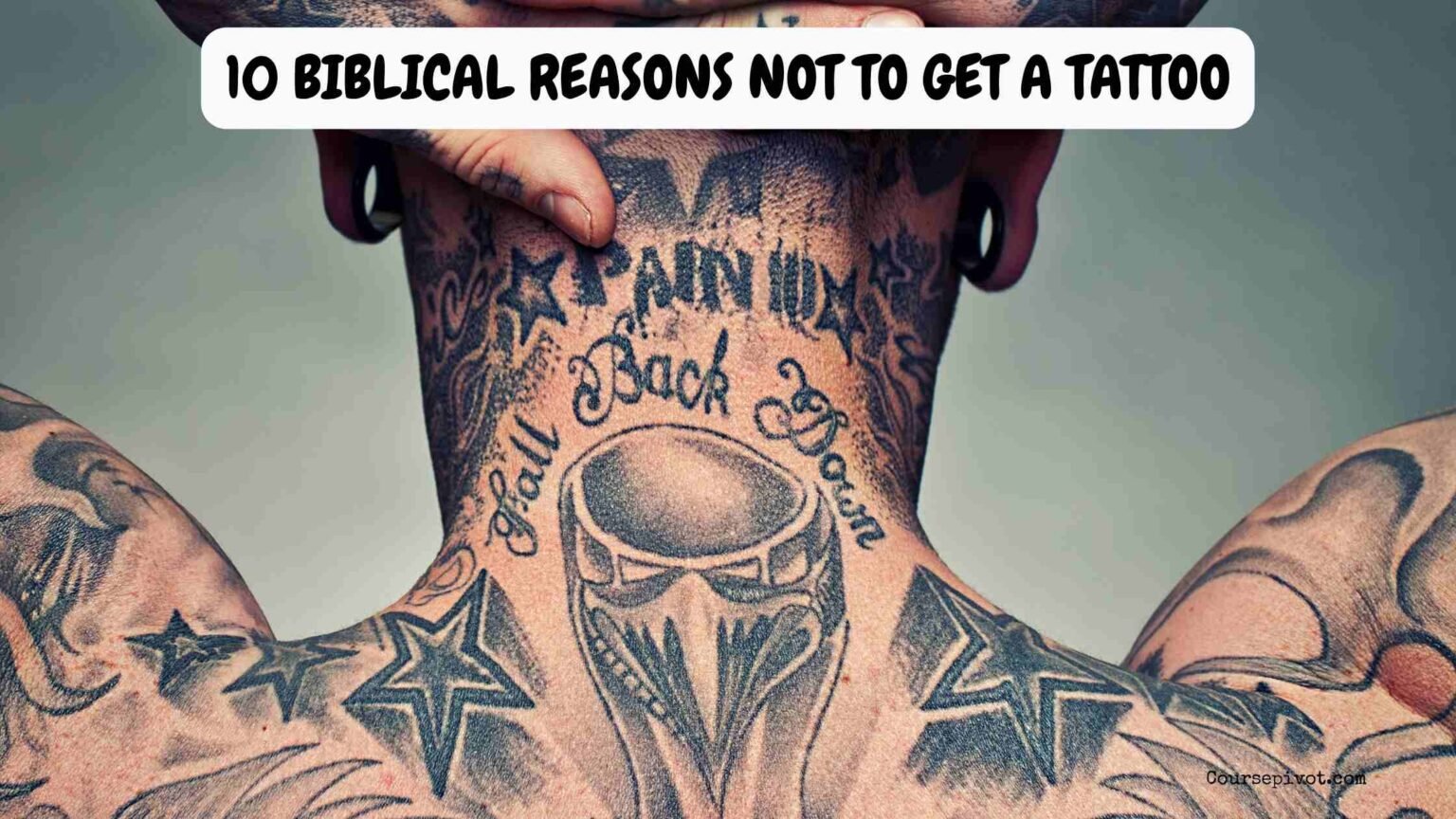
John Piper makes the same point: To convert “new creation” into an external dress code is to impose meaning not present in the text. Claim 3 — “Tattooing is a worldly thing of the flesh, the world, and the devil.” This is an assertion, not a biblical argument. Scripture defines “the flesh” as sinful desires, not ink on the skin (Gal 5:19–21). Scripture defines “worldliness” as lust, pride, and rebellion (1 John 2:15–17). Scripture defines “the devil’s works” as idolatry, lies, hatred, immorality (John 8:44; 1 John 3:8). None of these categories apply to a tattoo in itself. The content of the tattoo may be sinful; the act of marking skin is morally neutral—just like clothing, hair, or jewelry. Claim 4 — “No Christian in his right mind would think it is acceptable.” This statement dismisses thousands of conservative theologians, pastors, and believers who hold a high view of Scripture. It replaces biblical argument with personal opinion and gatekeeping of who qualifies as “in their right mind.” R.C. Sproul, often considered one of the most conservative theologians of the last century, warned against this approach: Claim 5 — “Authorities with degrees are Nicolaitan, cultic, deceived, liberal, etc.” This again avoids the actual arguments and shifts to broad accusations: “cult” “deceived” “liberalism” “Nicolaitanism” “seeker-friendly compromise” None of these accusations engage: the Hebrew meaning of qaʿaqaʿ the pairing with “for the dead” Leviticus 19’s anti-pagan structure NT treatment of ceremonial laws covenantal fulfillment lack of NT prohibition Moreover, Revelation’s Nicolaitans promoted sexual immorality and idolatry, not differences over cultural customs or exegesis. Craig Keener notes: Calling conservative scholars “Nicolaitans” is historically inaccurate. Claim 6 — “They want the world to come into the church and nobody has to change.” This is a sweeping generalization that does not describe: Grudem Piper Schreiner Wenham Sklar All of whom are: complementarian pro-inerrancy anti-liberal anti-seeker-sensitive anti-charismatic excess pro-church discipline pro-holiness They affirm tattoos not because of liberal compromise, but because of contextual, covenantally consistent exegesis of Leviticus 19:28. Equating them with seeker-sensitive churches is factually incorrect. Summary Issue Respondent’s Claim Scholarly / Biblical Correction Law category “Not ceremonial” Hebrew context + covenant theology show it is ceremonial New creation “Prohibits tattoos” NT applies this to holiness, not appearance Worldliness “Tattoo = flesh” Scripture defines flesh by sin, not ink Right mind “No real Christian” Sproul: don’t bind where Scripture doesn’t Scholars “Cult / Nicolaitan / liberal” Factually untrue; they are conservative theologians Seeker-friendly “They want worldliness” Grudem/Piper are the opposite of seeker-sensitive Conclusion The new response bypasses every exegetical, historical, linguistic, and covenantal argument previously presented. Instead, it substitutes moral assertions, broad condemnations, and claims of liberalism—none of which address the text of Scripture or the scholarly evidence. Conservative biblical scholarship remains unanimous: Leviticus 19:28 forbids pagan mourning rites, not all body marking for all believers in all times. 10 Biblical Reasons Not to Get a Tattoo Posted byMartin Lawrence and Arquette Erica DateMay 27, 2025 Tattoos spark debate among believers. Some see them as art, others as contrary to faith. Why might the Bible caution against tattoos? As someone who’s studied scripture for years, I believe avoiding tattoos aligns with biblical principles for some Christians. This article explores 10 biblical reasons not to get a tattoo, each grounded in a Bible verse. Let’s examine what scripture says about tattoos and faith. Table of Contents ① Body as God’s Temple ② Old Testament Prohibition ③ Avoiding Worldly Conformity ④ Stewardship of Resources ⑤ Focus on Inner Beauty ⑥ Avoiding Regret ⑦ Honoring God’s Image ⑧ Witness to Others ⑨ Health and Safety Risks ⑩ Seeking God’s Will Aligning Tattoos and Faith The Bible offers guidance on our bodies and choices. While tattoos are popular—32% of adults have one, per a 2023 Pew Research study—some Christians pause. What does scripture teach? It emphasizes stewardship, holiness, and discernment. I’ve seen avoiding tattoos reflect a desire to honor God. These points offer biblical perspectives. This topic invites reflection. Tattoos and faith raise questions about identity and devotion. Why consider these reasons? They help align decisions with biblical values. Each point below draws from scripture and careful thought. Let’s dive in with open hearts. This verse calls us to honor God fully, including with our bodies. Let’s uncover 10 biblical reasons not to get a tattoo, rooted in scripture. Ready to explore? Here we go. ① Body as God’s Temple Our bodies are sacred. Why does this matter? Scripture calls them temples of the Holy Spirit. Tattooing may be seen as altering God’s creation. I believe honoring our bodies means keeping them as God designed. Avoiding tattoos respects this principle. 1. Preserves body’s natural state. 2. Honors God’s design. 3. Reflects spiritual stewardship. Bible Verse: “Do you not know that your body is a temple of the Holy Spirit within you, whom you have from God?” – 1 Corinthians 6:19 Tattoos and faith call for careful stewardship. ② Old Testament Prohibition Scripture directly addresses markings. How does this apply? Leviticus explicitly warns against tattoos. While some argue it’s outdated, I see it as a call to holiness. Avoiding tattoos aligns with this command. Principle Biblical Guidance Holiness Avoid body markings Obedience Follow God’s law Purity Reflect God’s will Bible Verse: “You shall not make any cuts on your body for the dead or tattoo yourselves: I am the Lord.” – Leviticus 19:28 Not getting a tattoo honors ancient guidance. ③ Avoiding Worldly Conformity Christians are called to stand apart. Why avoid worldly trends? Tattoos often follow cultural fads. I’ve noticed faith calls us to distinctiveness. Avoiding tattoos resists worldly pressures. Bible Verse: “Do not be conformed to this world, but be transformed by the renewal of your mind.” – Romans 12:2 Tattoos and faith urge us to prioritize God’s values. ④ Stewardship of Resources Tattoos cost time and money. How does this relate to faith? Scripture calls us to use resources wisely. I believe spending on tattoos may divert from God’s purposes. Not getting a tattoo prioritizes stewardship. Bible Verse: “As each has received a gift, use it to serve one another, as good stewards of God’s varied grace.” – 1 Peter 4:10 Avoiding tattoos reflects responsible stewardship. ⑤ Focus on Inner Beauty God values the heart. Why prioritize inner beauty? Tattoos emphasize external appearance. I’ve found true beauty lies in character. Avoiding tattoos shifts focus to the soul. 1. Cultivates godly character. 2. Honors inner transformation. 3. Reflects God’s priorities. Bible Verse: “Man looks on the outward appearance, but the Lord looks on the heart.” – 1 Samuel 16:7 Tattoos and faith highlight inner over outer. Read our blog on 20 Reasons to Thank God ⑥ Avoiding Regret Tattoos are permanent. Why consider permanence? Many regret tattoos later. I believe scripture encourages thoughtful decisions. Not getting a tattoo prevents future remorse. Bible Verse: “Whoever walks in integrity walks securely, but he who makes his ways crooked will be found out.” – Proverbs 10:9 Avoiding tattoos promotes careful choices. ⑦ Honoring God’s Image We’re made in God’s image. How does this guide us? Altering our bodies may dishonor His design. I see avoiding tattoos as respecting our divine creation. Bible Verse: “So God created man in his own image, in the image of God he created him.” – Genesis 1:27 Tattoos and faith call us to honor God’s image. ⑧ Witness to Others Our choices reflect faith. Why does this matter? Tattoos may cause others to stumble. I’ve seen believers choose not getting a tattoo to uphold their witness. Bible Verse: “Abstain from every form of evil.” – 1 Thessalonians 5:22 Avoiding tattoos strengthens our testimony. ⑨ Health and Safety Risks Tattoos carry risks. How does this align with faith? Infections or allergic reactions can harm the body. I believe caring for our health honors God. Not getting a tattoo prioritizes safety. Bible Verse: “So, whether you eat or drink, or whatever you do, do all to the glory of God.” – 1 Corinthians 10:31 Tattoos and faith emphasize body care. ⑩ Seeking God’s Will Faith seeks God’s guidance. Why prioritize His will? Tattoos may reflect personal desires over God’s plan. I’ve found peace in aligning choices with prayer. Avoiding tattoos seeks God first. Bible Verse: “Trust in the Lord with all your heart, and do not lean on your own understanding.” – Proverbs 3:5 Not getting a tattoo reflects trust in God. Read our blog on 3 Reasons Why God Allows Suffering Aligning Tattoos and Faith These 10 biblical reasons not to get a tattoo offer a faith-based perspective. Why reflect on this? Because tattoos and faith involve choices that honor God. I believe scripture guides us to stewardship and holiness. From God’s temple to His image, avoiding tattoos aligns with biblical values. The choice is personal but profound. Not getting a tattoo respects God’s design and witness. What’s guiding your decisions? Scripture provides clarity. Prayer and discernment lead the way. Let’s seek God’s will. How can you honor Him? Reflect, pray, and study His word. 1. Seek God in prayer. 2. Study scripture for guidance. 3. Live as God’s witness. Avoiding tattoos is a faith journey. Let’s walk it with purpose. 10 Biblical Reasons Not To Get A Tattoo
-
The reason that Kinder Morgan could not build the TMX pipeline themselves and the Liberal government had to buy it was because of all the regulations which drove investment out of Canada. Also because the BC NDP government fought against it in court. They allowed FNs and environmental groups to run the show and impede the development of pipelines. That meant the only way it could get built was by the federal government buying it and taking over. That situation still exists and prevents new pipelines from being built. It is up to Carney and his government to abolish all the ridiculous laws that impede investment and energy resource development. The must abolish the no more pipeline laws, the energy caps, and the tanker ban. They have effectively killed billions of dollars in revenue for Canada. Consequently, it is the taxpayers that ended up paying tens of billions of dollars. The taxpayers were the ones who were forced by the Liberal government laws and policies to pay a fortune to buy and finish building the TMX pipeline. It is our children and children's children who will have to pay for all this. We are now left with a deficit in the order of 70 billion dollars because of the Liberal government mismanagement the past ten years and a massive national debt in the order of 1.46 trillion dollars.
-
LOL.. Oil and tobacco are two totally different things. Tobacco is harmful to health; oil is necessary for life on earth and needed by the billions of people that use it for everything.
-
Conservative Leadership Race
blackbird replied to Queenmandy85's topic in Federal Politics in Canada
It is ridiculous and childish to think we should stop burning petroleum. Practically nobody burns coal. It might be used in some refining industries as it may be essential to refine metals or minerals. You have to heat them to melting point somehow. Billions of people around the world depend on fossil fuels for survival. They are used for almost everything. Hundreds of millions of cars, trucks, ships, aircraft use it. It is used for manufacturing many products. I hope it is not going away. So how nonsensical is it to say we should stop using it? Saying things like that sound very like fantasyland, as if the world can suddenly stop breathing and emitting CO2. -
No, it is not ceremonial law. It is just common sense. I gave you New Testament verses that show a believer is a new creature in Christ. Old things are passed away. Our bodies belong to the Lord and should not be defaced with tattoos. It's as simple as that. Tattooing is a gross worldly thing of the flesh, the world, and the devil. No Christian in his right mind would think it is acceptable. I realize we have many so-called authorities, who have built up a name for themselves and have large followings. But they are deceived and deceiving others. That is a kind of cult. Same with all the so-called scholars who push corrupt versions of the Bible on the masses in seminaries and Bible colleges. They are a Nicolaitan in their behavior. That means they think because they took courses, got degrees, that they somehow have special knowledge and the laity are ignorant. They also are out to appease the masses of unbelievers out there, telling them it doesn't matter how they dress, they can get tattoos and look like the rest of the world. It's liberalism. Some of them lead or are involved in seeker friendly churches. That want the world to come into the church and nobody has to change. They have rock bands in their so-called churches, encourage the Charismatic heresies, and dress any way they feel like it, including tattoos.
-
Grudem therefore does not “ignore” the verse; he interprets it through covenant theology, distinguishing between laws fulfilled in Christ and those that express permanent moral norms. That is an incorrect interpretation. I think millions would agree with me. We are not under the laws as a way of salvation, but they still apply. Who would say nine of the ten commandments don't apply today. Don't you think the commandments against murder, stealing, and adultery still apply? What about the commands requiring loving God and loving thy neighbour? What about the command against bestiality in Leviticus? Doesn't that still apply? When they say fulfilled in Christ, you better define exactly what that means, because it doesn't mean they no longer serve as a guide. You are not making sense. Nothing around the verse Lev 19:28 says anything to indicate that marking oneself was related to mourning for the dead or pagan religions or that it was because of heathen beliefs. That is a false interpretation. It just condemns marking oneself, PERIOD.
-
What does that have to do with tattooing?
-
Similarly, John Piper warns that liberty must never become license but also must not be bound by man-made restrictions: “If you can do it from faith, for the glory of God, it is permissible; if you cannot, it is sin.” (Desiring God, “Should Christians Get Tattoos?”) According to what you quoted, Wayne Grudem and John Piper completely ignore Leviticus 19:28, which forbids marking the body.
-
Nonsense. Your thinking a born again Christian can mix fleshly worldliness with the new creature in Christ is complete heresy. You don't understand what the Bible tells us about the nature a Christian should have. "And have put on the new man, which is renewed in knowledge after the image of him that created him:" Col. 3:10 KJV "Know ye not that ye are the temple of God, and that the Spirit of God dwelleth in you?" 1 Cor. 3:16 KJV Source: https://bible.knowing-jesus.com/topics/The-New-Nature/type/kjv Perhaps you don't understand because you don't even accept a real Bible, the King James Version, as God's providentially preserved Scripture. Therefore you proved you don't even believe there is one word for word inspired and preserved Bible in English. Using a new corrupt version, which differ in thousands of places, allows you to make up your own interpretation because you don't think there are any absolutes on how a Christian should look. Because you don't believe God preserved one inerrant Bible, you don't believe the words in the corrupt version you use are God's exact words. That allows you the freedom to interpret it in any way you wish. Mixing liberalism with Biblical Christianity is a form of Nicolaitanism, which Jesus said He hates. "15 So hast thou also them that hold the doctrine of the Nicolaitans, which thing I hate. 16 Repent; or else I will come unto thee quickly, and will fight against them with the sword of my mouth." Rev. 2:15, 16 KJV
-
I've been going to several different Christian churches for 45 years and have never met one person who rejects medical treatments. All of the people I have every met in churches go to doctors and receive medical care the same as everyone else. So I don't know what kind of people you are talking about or where you met them. Of course there are oddballs in every sphere of life. As I said you seem to have a very perverted view of normal Christians. They don't reject normal legitimate science. They don't spend their time fighting against science or medicine. As for ignorance, the Bible makes it clear that those who reject God are in for a tough time in the next life. Rejecting the theory of evolution is completely correct. It is a false dogma and some believe it like a religion. It has deceived millions, maybe billions of people and probably helped billions go to hell because the theory casts doubt on the Bible. The Bible gives an account of the supernatural and miraculous. That means they don't have to meet any kind of scientific criteria. The supernatural is separate from the material world system and laws of physics.
-
God uses the medical pros to care for people.