blackbird
-
Posts
11,721 -
Joined
-
Last visited
-
Days Won
9
Content Type
Profiles
Forums
Events
Everything posted by blackbird
-

So much for socialized or public health care in B.C.
blackbird replied to blackbird's topic in Federal Politics in Canada
"The case for a new oil pipeline: What’s in it for British Columbia and Alberta? On June 5, 2025, the Government of British Columbia (BC) approved that ongoing construction had been sufficiently commenced on a new pipeline intended to supply natural gas to a proposed floating liquefied natural gas (LNG) export terminal off the province’s north coast, therefore allowing it to continue without new permits. Given current market demands and provincial interests, it is reasonable to expect that BC should support another oil pipeline to facilitate exports from its northwest coast which would ultimately result in increased Canadian oil and gas production and the diversification of Canada’s oil and gas markets. Furthermore, it could facilitate mutually beneficial opportunities between BC and its largest provincial trading partner, Alberta. BC-Alberta trade interdependence and economic opportunity Alberta provides the market for most of the natural gas liquids (NGL) and all of the condensate produced from BC’s natural gas. NGL and condensate revenue (known as liquids value) is the driver behind natural gas production in western Canada. However, because natural gas prices in western Canada have been very low or even at times negative, natural gas production has only been viable in recent years due to its liquids value. In addition, BC NGLs are a significant feedstock for Alberta’s petrochemical industry and BC condensate is used almost exclusively to blend with Alberta’s bitumen so it can be transported to export markets. Condensate alone generates billions of dollars in revenue each year for BC and its natural gas producers, making BC’s trade relationship with Alberta critical to its highly prospective natural gas industry. An oil pipeline could also provide opportunities to increase trade and provide power security by creating a northern electrical transmission link between Alberta and BC. Such a link would increase power reliability in Alberta and BC with the potential to reduce electricity costs for consumers in both provinces. The case for an agnostic trade corridor linking Alberta to BC’s northwest coast gives reason to believe that a new oil pipeline would serve the interests of both provinces—and of Canada as a whole. The oil and gas industries in Alberta and BC are mutually dependent on one another, and the inability to build pipelines between the two provinces represents a significant trade barrier. For more information on this topic, please contact the author, Bernard J. Roth, KC. " The case for a new oil pipeline: What’s in it for British Columbia and Alberta? - Global Energy Blog -
So much for socialized or public health care in B.C.
blackbird replied to blackbird's topic in Federal Politics in Canada
quote In the years examined, Alberta’s taxpayers (individual and corporate) made a $561 billion gross contribution and a $272 billion net contribution to federal government finances; The share of that coming from Alberta’s oil and gas extraction sector was, at a minimum, nearly $53 billion, or about 9 per cent of Alberta’s gross contributions and 19 per cent of its total net fiscal contribution over the period; On an annual basis, the annual contribution of the oil and gas extraction sector has ranged from $2.7 billion to $6 billion, or about 15 per cent to just under 32 per cent of Alberta’s total net contribution to the federal government’s finances during the period. The average annual contribution from oil and gas has been over $4.1 billion per year over the period. The $53 billion figure is understated as it does not include indirect federal taxes on production and taxes on products (i.e., GST, excise taxes, duties, import taxes, air transportation tax, gasoline and motive fuel taxes, etc.) paid by the oil and gas extraction sector in Alberta over the period unquote $53 billion to Ottawa: The Alberta oil and gas sector’s contribution to federal government finances, 2007 to 2019 - Canadian Energy News, Top Headlines, Commentaries, Features & Events - EnergyNow -
Premier Ford threatened to put a 25% tariff on electricity to several U.S. states or cut off their electricity. This lasted about 24 hours until he was called to the White House and given the facts (which the public was not told). He quickly withdrew the threat. I wonder why? Perhaps he was told the straight goods, that is, that the U.S. would come in and take over control of the electricity. He suddenly saw the light and realized he was really powerless. One doesn't cut off essential things like electricity and not expect a major reaction. There are some things Canada can not do if they wish to remain a sovereign country.
-
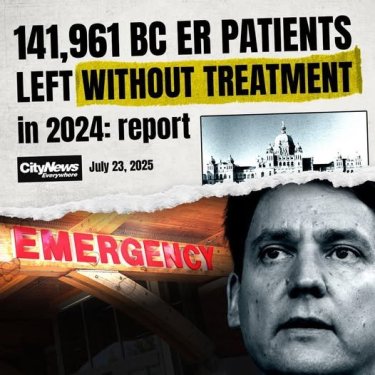
Why Socialism is often a disaster when it has been tried. We also see the disaster of all levels of government's interventionist policies in our resource industries in Canada. It has often taken 15 years for applicants to get approval to start a mine. Of course with the Liberal C69, no more pipelines bill, and the bill banning tankers on the B.C. north coast, they have effectually killed making Canada an energy superpower. Much of our oil reserves remain in the ground while other countries can sell their oil on world markets and make billions of dollars while Canada makes very little. Money that is urgently needed to pay for public health care and help get Canada out of debt. Don't hold your breath to see if the federal government changes these things. They passed C5 ostensibly to make resource industry easier to start, but did nothing about all the blockages to building pipelines. Why is that? This tells it all. Island Health (Vancouver Island) has the worst problem in ERs. The number of people leaving without treatment has grown exponentially in the past six years. This is not good. Some of these people may have serious health issues that could be going without being treated. This could lead to serious consequences. It may involve heart problems, cancer or other serious medical problems that patients do not really understand.
-
Hmmm. Guess you better start praying for a miracle because the NDP is not going to be much help if you need to go to the emergency room.
-
Already explained it is the amount of traffic on the water around Vancouver harbour and Georgia Strait that is a real hazard. I doubt if the shipping companies worry about the sea condition on Hecate Strait. I worked on a ship on the north Pacific and we experienced very rough seas most of the year. The ships coming and going from Prince Rupert must go through the rough seas to cross the open Pacific ocean and spend days and weeks crossing the Pacific. The Hecate Strait part near Prince Rupert is only a matter of hours to cross. I doubt they are concerned about that. It's the big ocean they must cross. I know of two ships that broke in half out in the north Pacific ocean in storms. Do you realize Canada is only shipping a small fraction of what we could be shipping and selling to Asia and the rest of the world? If we want to become an energy superpower, we will need to greatly increase our pipeline capacity. We have the reserves in the ground and just need to develop our pipeline network west and east to seaports. If you oppose that, then you oppose Canada becoming more independent of the U.S. and oppose Canada becoming more of an energy superpower. In that case, other countries will continue to sell their oil instead and we will continue to lose billions in revenue that we need for increasing the Canadian Forces and improving health care, etc.
-
Not yet but that's because of the hostile investment atmosphere in Canada where the government gives far more power to FNs, environmentalists, etc. and massive amounts of regulations, requirements, red tape, hearings, and fees that make the process drag on for years and years. Then there is the no more pipeline law from bill C69 and the tanker ban on the BC north coast. Until those laws are scrapped, there might be no company that would want to get involved. The BC NDP opposed the Trans Mountain Pipeline expansion for years and fought it in court as well. They lost in the end but that is the reason the federal government had to take it over to get it built. It was the only pipeline supplying oil to the populated southwest BC and Washington refineries and desperately needed to be expanded. The private company could not afford to spend billions and didn't have the ability to fight all the groups and fight the BC government so the feds bought it to get it done. The BC NDP wasted millions of dollars of taxpayer money fighting the project too. They probably delayed its construction a long time as well by tying it up in court and forcing the federal government to take it over. Yet the people are stupid enough to keep voting for them. What company would want to get involved in that kind of mess to try to get a pipeline approved and built? The BC NDP made things worse by approving UNDRIP about six years ago which many claim gives FNs a veto over resource projects. That really threw the rights of the vast majority of citizens of BC down the drain. The best interests of the country and citizens as a whole are just ignored by the NDP. That is just proof how bad the system is in Canada to get resource projects approved and built. That's also why it ended up costing billions more. Unfortunately we live in a bureaucratic country where everything costs more because of government red tape, regulations, and fees, at all levels.
-
You are correct. My mistake. We are increasing our shipments to China this year. However, what we ship to China is a fraction of what we could be shipping to China and Asia. But my point remains. That is, we could be shipping far more oil to China and other countries in Asia if we had another pipeline to somewhere like Prince Rupert, BC. That's what Premier Smith in Alberta has been talking about it for. Make Canada an energy superpower in the world. Get away from dependence on the U.S. We are still selling 90% of our oil to the U.S. at a reduced price. We need to move away from that and more toward international markets. Would you agree?
-
Hecate Strait is between 140M and 240M deep. That is hundreds of feet in depth, far deeper than any ship requires. Large ships like tankers can easily travel through the winds and waves. They have to travel through a lot of stormy weather in the Pacific Ocean. The amount of TMX oil shipped to Asia has been reduced. Not much is going to Asia now. "Canadian crude exports from the recently expanded Trans Mountain pipeline are shifting to the U.S. from Asia, showing how the major project’s effect on global oil markets remains in flux. Exports by tanker to the Far East in July fell 45 per cent from a month earlier to 107,000 barrels a day, while shipments to the U.S. West Coast — mostly to California — more than tripled to 240,000 barrels a day, Vortexa ship-tracking data show. Shipments to China, the biggest Asian buyer, fell by about 36 per cent to 91,400 barrels a day." Trans Mountain pipeline oil exports shift to U.S. from Asia | Financial Post Not much is being shipped to Asia. Canada has vast reserves of oil that we could be shipping to the rest of the world. It will take years to build more pipelines. In the meantime, other countries will be selling oil to the rest of world. The demand is there. We have been hampered by various groups and government bureaucracy for years and are left behind.
-
Eby and the NDP do no support making Canada an energy superpower. We in BC are shackled by NDP ideology that opposes pipeline expansion. We could be selling far more to the rest of the world if the NDP got out of the way. We have huge reserves in the ground. But all the gocernment regulations and opposition groups make it risky for a company to even try. They know they could lose a fortune just trying to get through all the hurdles. Meanwhile the health care is failing and government doesn't have enough money. They could have far more in taxes and royalties if everyone supported pipelines and helped it happen. Not with NDP.
-
The existing pipelines to Burnaby/Vancouver just don't have the capacity to double or triple the amount of oil Alberta could be shipping to Asia. I already explained why a new pipeline should go to the north. 1. Shorter distance to Asia 2. Much less busy shipping traffic on the coast.
-
I read your two links and could find nothing there to say how much is shipped by tanker. Are you pulling the above claim out of thin air? Where is the link that says all the capacity goes by tanker. I read another website the other day that says a large part goes to the U.S. and only a small amount goes by tanker overseas. Show me the link that explains that. The weather on the north coast is not a problem for large ships. They can sail in it anyway. Once a ship gets out in the open ocean, the weather is rough in the winter regardless whether it comes from Vancouver or Prince Rupert. The Pacific Ocean gets rough much of the year. I spill in Georgia Strait would be much more of a disaster because it is heavily populated all around that area. Prince Rupert area is mostly wilderness and only lightly populated. What do you say about all the shipping traffic I told you about in the Vancouver/Georgia Strait area? That should be a big concern too. Better to avoid a high traffic area. No, the environment further north is no more of a concern than in southern B.C. A spill would be the same kind of problem wherever it occurred.
-
You didn't acknowledge that the existing TMX pipeline doesn't have the capacity to ship a significant amount to Asia because it is already being used for refineries in Washington and B.C. The idea of a third pipeline using the same right of way to ship oil for Asia is not a good idea for reasons I already explained. I repeat: 1. That would mean many more big oil tankers moving in and out of the port of Vancouver which is already a busy shipping area. That increases the chances of an accident. The Georgia Strait between Vancouver and Juan de Fuca Strait is a very busy shipping area with B.C. Ferries, freighters, fishing vessels, pleasure craft, etc. now. Not a good idea to add more tankers there if not necessary. The north coast out of Prince Rupert would be very lightly used compared with Vancouver and Georgia Strait. 2. The distance is about 1000 km further from Vancouver to China than from Prince Rupert to China.
-
That's not correct. TMX provide the oil to Washington and they refine it and ship the gas back to B.C. B.C. doesn't have refineries of its own in the lower mainland. So even if you built refineries in the lower mainland, the TMX would still be required for B.C. and there would still not be enough capacity to ship a large amount of oil to Asia through it. We still need another pipeline for Asia.
-
The U.S. is our major customer. You would have to ask an oil company financial officer why we sell most of our oil to the U.S. from pipelines in Alberta and B.C. That is just the way the system evolved over time. B.C. gets much of its gas for motor vehicles from refineries in the U.S. If we are going to stop shipping oil to the U.S. through the TMX pipeline, then you must first build refineries in B.C. lower mainland area. The refineries for gas for B.C. motor vehicles are in the U.S. So even if you had refineries in lower mainland B.C. to provide gas from TMX for B.C. motor vehicles, you still would not have enough capacity left in the TMX pipeline to ship a large amount of crude oil to Asia through Vancouver. B.C. needs the TMX pipeline for its own needs. The other thing is Vancouver is a busy seaport and there are lots of vessels moving around the port. So if you want to ship lots of oil to Asia, why would you do it through a port like Vancouver which is much further from Asia and much busier than Prince Rupert BC? Shipping through a port like Prince Rupert which has much less traffic is safer and less chance of accidents. So we need the TMX pipeline to provide fuel for B.C. motor vehicles to begin with. Therefore TMX does not have enough capacity to ship much crude oil to Asia and is the reason not much for Asia goes through TMX.
-
The population of B.C. are losing their rights to the use of vast areas of land in the province because of the BC NDP's obsession with giving a handful of FNs the right to VETO land use in areas of the province. This is negatively affecting the great majority of people in the province because a relatively small number of FNs are able to dictate land use in various areas. This is a result of the BC NDP putting UNDRIP into law and now the interpretation of UNDRIP and their obsession to give control of the land, resource development and occupation of the land back to a small handful of FNs. We don't know where this is heading but it does not look good for the people of Canada. An example of what is happening was in the news today. A B.C. FN group on the B.C. coast just announced they oppose and will not approve a new oil pipeline to the B.C. coast from Alberta. If they have this veto power, the pipeline would not be built and this would effectively prevent Canada from shipping a large part of its oil reserve to Asia. This could kill the hope of making Canada an energy superpower in the world. For those thinking we already have a pipeline to the west coast with the TMX pipeline to Vancouver, that one is used to ship most of its oil to the U.S. and only a very small amount of it goes to Asia. A new pipeline would be needed to be able to ship a significant amount to Asia, a major part of the world in need of our oil. quote The federal government’s new law designed to fast-track major projects has put the true meaning of UNDRIP’s “free, prior and informed consent” provisions under the spotlight. At the core of the issue is a simple question: does “consent” mean an Indigenous veto over projects, even those in the public interest? While the prime minister and his justice minister have tried to walk a delicate line to avoid making that commitment, British Columbia has gone all-in on the veto approach. Under the auspices of B.C.’s Declaration on the Rights of Indigenous People’s Act, Premier David Eby has admitted that provincially significant projects on Crown land will not be expedited under its own fast-track law without the consent of Indigenous groups. At the same time, an effective veto is already being written into a growing number of agreements with Indigenous groups covering vast swaths of the province. One example is the shíshálh Foundation Agreement, which gives varying degrees of decision-making power over 1.2 million acres of public land on B.C.’s Sunshine Coast to an Indigenous government representing just 1,700 people. Under the agreement , all applications for all Land Act decisions in the region will now go through a shared, consent-based or even exclusive shíshálh decision-making process. This agreement is rightly seen as a precursor to more deals across the province, despite the fact that its consent-based arrangements are exactly what forced the government to pause its contentious Land Act amendments last year after significant public blowback. Government documents state that “consent” means that “both the Province and a First Nation must approve an authorization before it can be issued.” It is difficult to see how consent, in this case, amounts to anything other than veto, despite official denials in this regard. In the shíshálh case, the consent provisions “require shíshálh Nation and B.C. to agree to the proposed activity before a provincial decision authorizing the activity.” In other words, even if a proposed activity is in the broader public interest, authorizations will not be issued without shíshálh Nation’s approval. The agreement goes even further, with a commitment “to explore an exclusive decision-making agreement.” This “would recognize the ‘jurisdiction’ of shíshálh to make decisions in relation to specified matters, with the Province stepping back from decision-making on those matters.” There is no legal basis in Canadian law for exclusive Indigenous decision-making over public lands, yet the province admits it would not be at the decision table at all — leaving the public interest totally unrepresented. Even so, the government maintains its implausible position that this is “not about a veto” but rather reflects the (democratically and legally-flawed) DRIPA principle that “both governments have authority to decide whether a particular authorization should be issued.” From a democratic standpoint, shíshálh Nation’s constitution is clear: only members can vote in shíshálh elections, and membership is based strictly on ancestry. This means that tens of thousands of citizens living in the large region covered by the agreement will have no democratic voice in consequential land-use decisions that directly affect their interests, a fact that has already led to an important constitutional challenge by one community group on the Sunshine Coast. And this is just one of many similar arrangements being implemented across B.C. Last month, the Province announced a joint land use planning process with five Indigenous groups covering an area larger than England in B.C.’s mineral-rich Northwest. Consent-based agreements are again touted as part of the process. This means Indigenous groups representing a combined population of less than 15,000 will be able to exercise decision-making power over a massive, economically crucial region impacting over five million British Columbians with whom they have no democratic relationship. Another recent agreement “requires the consent of the Tŝilhqot’in Nation for any mine in the Teẑtan Area that is a reviewable project under the Environmental Assessment Act to proceed.” Most, if not all, of the 740,000 acres covered by the new agreement is outside of the Tŝilhqot’in Aboriginal title area recognized by the Supreme Court of Canada, and remains public land. Once again, the B.C. government has agreed to an effective veto over an area of public land for a governing body that non-Indigenous British Columbians cannot vote for. And once again, they’ve failed to preserve their own basic responsibility to make decisions in the broader public interest. Over the years, Canadian courts have consistently called for a balancing of the public interest with the unique interests of individual Indigenous groups. Finding that balance is supposed to be the difficult but critically important task of the governments we elect. Instead, under DRIPA, the B.C. government is increasingly abdicating its responsibility to protect the public interest, and eroding the foundational principles underpinning our democracy. Time will tell whether the federal government follows suit. Caroline Elliott, PhD, is a Senior Fellow with the Aristotle Foundation for Public Policy and sits on the board of B.C.’s Public Land Use Society (publiclanduse.ca). unquote Caroline Elliott: The end of Canada is coming and B.C.'s NDP is leading the charge "British Columbia (2019) In 2019, British Columbia became the first jurisdiction in the world to pass legislation incorporating UNDRIP as law through the Declaration on the Rights of Indigenous Peoples Act, [SBC 2019] Chapter 44 (“BC DRIPA“). DRIPA commits the province of British Columbia to harmonize its laws with UNDRIP and outlines processes for collaboration with Indigenous nations in the province. Government of Canada (2021) In 2021, the federal government enacted the United Nations Declaration on the Rights of Indigenous Peoples Act, S.C 2021, c.14 (the “Canada DRIPA“) which is similar to the purpose of the B.C. DRIPA, and also sets out a statutory framework for consulting and cooperating with Indigenous nations on its implementation through an action-plan. Northwest Territories (2023) In 2023, the Northwest Territories became the third jurisdiction in Canada to enact UNDRIP legislation with the United Nations Declaration on the Rights of Indigenous Peoples Implementation Act, SNWT 2023, c. 36, (“NWT DRIPA“) which acknowledges in the preamble that Indigenous Governments or Organizations of the Northwest Territories have signed a Memorandum to support the implementation of the Act. Similar to the BC DRIPA and the Canada DRIPA, the NWT DRIPA sets out a process-approach to developing laws and policies to give effect to UNDRIP principles in domestic law. Section 4 states that the NWT DRIPA binds the Government of the Northwest Territories." UNDRIP in Practice: The Evolution of UNDRIP in Canadian Law | Boughton Law The people of B.C. and Canada had no real voice in the adoption of UNDRIP in B.C. and by the federal government. It is surprising that such a major change was made to Canada without a referendum from the people. It is so major that one would think it would require a Constitutional amendment which would entail a major Constitutional amendment process being completed. I don't think Canadians were demanding something like this. It was just imposed on them by ideological governments. Did they really know what they were doing? Kind of slipped in under the guise of "reconciliation".
-
The major reason there are no companies jumping in to offer to build a pipeline across northern B.C. (actually more central B.C., Edmonton to Prince Rupert) is because of the the federal laws still in existence that would prevent the pipeline from being approved and proceeding. Bill C69 is still there and the tanker ban on the north BC coast is still there. The federal government under Carney would have to kill those laws before anything can get started. We are waiting to see how serious he is about getting a pipeline built.
-
Crown seeking 7 years for Tamara Lich
blackbird replied to Moonlight Graham's topic in Federal Politics in Canada
" From January to March 2020, a series of civil disobedience protests were held in Canada over the construction of the Coastal GasLink Pipeline (CGL) through 190 kilometres (120 mi) of Wetʼsuwetʼen First Nation territory in British Columbia (BC), land that is unceded. Other concerns of the protesters were Indigenous land rights, the actions of police, land conservation, and the environmental impact of energy projects. Starting in 2010, the Wetʼsuwetʼen hereditary chiefs and their supporters made their opposition to the project known and set up a camp directly in the path of the Enbridge Northern Gateway Pipelines, a path similar to that which would later be proposed for the Coastal GasLink Pipeline. Northern Gateway was officially rejected in 2016, but the CGL project moved through planning, indigenous consultations, environmental reviews and governmental reviews before being approved in 2015. However, the approval of all the Wetʼsuwetʼen hereditary chiefs was never granted. In 2018, the backers of the pipeline project gave the go-ahead to the CA$6.6 billion project and it began construction. Access to the Coastal GasLink Pipeline construction camps in Wetʼsuwetʼen territory was blocked and the Coastal GasLink project was granted an injunction in 2018 to remove the land defenders. In January 2019, the Royal Canadian Mounted Police (RCMP) of British Columbia removed the blockades and CGL pre-construction work in the territory was completed. Subsequently, the blockades were rebuilt and Coastal GasLink was granted a second injunction by the BC Supreme Court in December 2019 to allow construction. In February 2020, after the RCMP enforced the second court injunction, removing the Wetʼsuwetʼen blockades and arresting Wetʼsuwetʼen land defenders, solidarity protests sprang up across Canada. Many were rail blockades, including one blockade near Tyendinaga Mohawk Territory which halted traffic along a major Canadian National Railway (CNR) line between Toronto and Montreal and led to a shutdown of passenger rail service and rail freight operations in much of Canada. The Eastern Ontario blockade was itself removed by the Ontario Provincial Police. Blockades and protests continued through March in BC, Ontario and Quebec. Discussions between representatives of the Wetʼsuwetʼen and the governments of Canada and British Columbia have led to a provisional agreement on the Wetʼsuwetʼen land rights in the area." 2020 Canadian pipeline and railway protests - Wikipedia In spite of all the blocking of railways, blocking of construction of the pipeline, I don't recall anybody receiving any significant jail time for their illegal actions. One law for truckers and their supporters who opposed Trudeau and another law for environmental radicals and hereditary chiefs who don't represent the majority of natives. No punishment for shutting down railways and construction of the pipeline in most cases. Just as a side comment, the hereditary chiefs in northwest B.C. claim thousands of square kilometers of land as their traditional territory and think they have the right to control what happens on that land. There is no proof that they even lived on the vast areas they claim. But they have figured out how the game to get more works. -
Why not triple the existing pipeline? There are several reasons they don't do it that way. 1. It is a shorter ocean shipping route from Prince Rupert in northwest B.C. to Japan and China and the other Asian markets. You have to look at a globe to see but the route goes across the north Pacific. A flat topographical map does not show the distance correctly. The distance from Vancouver to China is about 9533 km. But from Prince Rupert to China it is about 8677 km, almost a thousand kilometers less. That makes a big difference for shipping anything. 2. Using a pipeline on the TMX route would greatly increase the tanker traffic in the busy port of Vancouver, Georgia Strait, and Puget Sound to and from the Pacific Ocean. They don't want to increase tankers in the Vancouver area if it can be avoided. Much better to use another port on the north coast that is not very busy. Vancouver harbour is already a busy place with various ships including cruise ships. Also, they must use pilots on deep sea ships from Vancouver out to the open Pacific and they are under speed restrictions because of whales, and other shipping in the lower mainland/Vancouver island area. The open ocean is closer to Prince Rupert which means less time spent getting in and out of the area. Much less shipping on the north coast as well.
-
Because the Trans Mountain Pipeline was decades old and not carrying enough oil. A new TMX pipeline was added but that still does not provide near the capacity that is needed to ship to Asia. Most of TMX oil goes to the U.S. However, Alberta could be shipping far more than twice as much oil through B.C. to Asian markets than it is now if we had a Northern Gateway pipeline to Kitimat or Prince Rupert from Alberta. Why would anybody oppose Canada shipping and selling its vast oil reserves to international markets and just let other countries do it? Doesn't make any sense. We could also be selling to many other countries if we had a pipeline to the east coast. But Energy East was killed by Trudeau, Quebec, FNs, and enviro groups. " Canadian crude exports from the recently expanded Trans Mountain pipeline are shifting to the U.S. from Asia, showing how the major project’s effect on global oil markets remains in flux. Exports by tanker to the Far East in July fell 45 per cent from a month earlier to 107,000 barrels a day, while shipments to the U.S. West Coast — mostly to California — more than tripled to 240,000 barrels a day, Vortexa ship-tracking data show. Shipments to China, the biggest Asian buyer, fell by about 36 per cent to 91,400 barrels a day." Trans Mountain pipeline oil exports shift to U.S. from Asia | Financial Post The vast majority of our oil goes to the U.S. We could be selling far more oil to Asian markets, but we need another pipeline to do it.
-
Up to now it has been impossible to build gas and oil pipelines into and through Quebec because the Quebec government relies entirely on public opinion in Quebec to make its decisions on what it will and will not allow to be built in Quebec. Public opinion is a very fickle thing and whether or not a country becomes economically well off by being an energy superpower should not depend on the whims of the public in one province. That is not leadership. Environmental organizations are also given a major platform and they are experts in driving public opinion. So regardless of what PM Carney wishes to do, unless he can convince the Quebec government to go along with building oil and gas pipelines in and through Quebec, we are dead in the water. Alberta and some western provinces hope to possibly ship oil and gas from a port on the Hudson Bay at the north end of Manitoba. This might work but it is a lot further from the Atlantic ocean than the maritime provinces of N.S., Quebec, and N.B. There might also be challenges in shipping through the Hudson Bay in the winter when the water freezes up with thick ice. So there are two problems with shipping from Hudson Bay, ice and distance. We also have problems with the ideological B.C. NDP which is opposed to oil pipelines and possibly even natural gas. They are often opposed to resource development. They are obsessed with fighting climate change. They are also obsessed with giving FNs control over resource development. So we can expect problems from them when it comes to building an oil pipeline across B.C. to Kitimat or Prince Rupert.
-
There are some institutions that a country like Canada located beside the world's most powerful country must control themselves in order to remain a sovereign country. If you are a Quebecois, you should know that. If the U.S. takes over every institution in our country, we would be just a puppet of the U.S. In that case, we would be completely run by and governed by the U.S. but would have no say in what they do with Canada. If that were the case, we would be better off being a 51st state and have the right to vote in elections in the U.S. But we don't want to be a 51st state, so why let them take over every industry and institution in Canada?
-
I can't believe anyone in Quebec who posts on here would not know that it was the Quebec government that rejected oil and gas pipelines into Quebec because of their environmental fanaticism. "Just a day after categorically rejecting the Energy East oil pipeline, Quebec is now rethinking its stance on a liquefied natural gas (LNG) pipeline from Western Canada thanks to economic uncertainty and trade tensions with the US. That’s because the government of Quebec Premier François Legault, which scrapped the LNG-Québec project in 2021 due to environmental concerns, is now signalling a willingness to reconsider it. Environment Minister Benoit Charette made it clear on Wednesday, however, that any revival would have to meet the “stringent environmental criteria” that led to its rejection in the first place." A tale of two pipelines: Quebec reconsiders LNG, but not oil Wake up and talk to your own government in Quebec instead of blaming everyone else for your problems.
-
No, they're not ripping off ordinary Canadians. quote Here's why: 1. No bailouts Supply management makes food consumers pay for the cost of producing it. By matching supply quotas with market demand, the industry sets stable, predictable prices. These farmers don't need government subsidies or bailouts. NDP Leader Tom Mulcair toured a southwestern Ontario dairy farm last week and listed the ways New Democrats would support farmers, including - you guessed it - defending supply management at trade talks. (Hannah Yoon/Canadian Press) Price comparisons for food can be fraught due to variable factors like transportation costs and retail competitiveness. But some studies suggest Canadians don't pay any more for milk than consumers in unregulated markets. When Australia ended supply management, the consumer price for milk went up. Other studies find small price differences. But unregulated farm prices in the U.S., for example, make taxpayers pay twice: the last major farm bill passed in Congress authorized some $1 trillion US in subsidies to keep American agriculture afloat. 2. Food sovereignty Like to buy local? Prefer fresh Canadian products? You're not alone. But a 100-mile diet is only possible when local farm businesses are stable. When export-driven beef, pork or grain farmers fall on bad times, their dairy and poultry counterparts, more secure with stable prices, sustain rural economies by continuing to employ people and patronize businesses like vet clinics, machinery dealerships and farm supply stores. The experience of other countries suggests ending marketing boards could lead to more concentrated industries, with farms operating on a larger scale in fewer locations. Fresh perishables that don't travel or age well, like raw chicken, could be harder to find. 3. Sustaining the little guy unquote Supply management in Canada: Why politicians defend farm marketing boards | CBC News These are good reasons why politicians of all parties support marketing boards in Canada. When margins are tight and prices fluctuate, farmers need economies of scale to get by. That is because Quebec chose to reject any pipeline from Alberta and B.C. They made the choice. They also rejected the Energy East Pipeline that would have shipped oil to Quebec and martime ports to sell overseas. Entirely Quebec's decision. It is surprising you don't know the simple facts. You need to do some studying before posting ignorant comments.
-
We share many similar values and interests, but we are a sovereign nation and have a different democratic system of government. Americans prefer a Republican system and have their own Constitution which is different than our Constitution. We have a Constitutional Monarchy which means we have a King or Queen as head of state. But the King does not govern Canada. We elect a Parliament or House of Commons and the party with the most seats forms the government. We also have Provincial governments which have certain powers under the Constitution. The powers are divided between the Federal government and the Provincial governments. So it is a different system. As far as Trudeau goes, he had his opinions and now he is gone from the Federal government. Many Canadians disagreed strongly with his comments and opinions. Politicians come and politicians go, but the country remains and will continue to be a sovereign country in association with other countries who share the same values. We have much in common with our American neighbours and will continue to do so even during the existing political leaderships in our countries and long after they are gone.