
BeaverFever
-
Posts
7,486 -
Joined
-
Last visited
-
Days Won
35
Content Type
Profiles
Forums
Events
Everything posted by BeaverFever
-
Doesn’t matter hundreds of rioters at the Capitol that day WERE violent, including the conspiracy crackpot Babbit who was at the front of a violent mob smashing down the last barrier between them and the evacuating senators who were just a few metres away. The six police officers who were the only line of defence had their pistols drawn and warned that they would have no choice but to open fire. Unfortunately for Babbit, like so many of the rights brainwashed cultists she was so caught in up in her fervour she had no ability to think rationally and she failed to recognize the obvious idiocy of attempting to charge the officers pointing guns. Republicans are the party that goes to absurd lengths to justify the police shooting of every unarmed black person including some where they were shot in the back while running away. And yet they howl over a large violent mob bearing down on 6 cornered officers and the nation’s leaders who had provided ample advance warning. Today’s republicans believe in nothing and will say anything. The psychological profile of MAGAs is accurate: “thick-walled, highly compartmentalized minds”.
-
For more info on this see these articles about Canadian teams winning the “Dragon Belt” sub-hunting competition back-to back during the first two years that Canadians participated in it (2021 and 2022). In 2023 Canadians finished a close third due to mechanical issues with their aircraft (the winner was a Japanese team in a Kawasaki P-1 and per the Canadians both the winners had adopted Canadian tactics). Interesting fact: the United States has never won the Dragon Belt contest which originated in 2019 between US, Australia and New Zealand (all operating P-8s) and no P-8 team has won the competition since Canadians joined the competition starting in 2021. The Demons of 407 Squadron defend anti-submarine warfare title …Reclaiming the coveted Dragon’s Belt as the overall top performer was a point of pride for the Aurora crew and maintainers, who also won the Kraken award for the most consistent attacks. The CP-140 is a variant of the Lockheed Martin P-3 Orion, but recent upgrades to mission systems, radar, EO/IR, and other sensors, as well as acoustic detection capabilities, have kept the aircraft on par with the newer Boeing P-8A Poseidon operated by the American, Australian, and Indian teams. ...”We operate a little bit differently being a turboprop airplane and the types of sonobuoys we use,” Kosciukiewicz explained of the Block III Aurora. “The P-8 tends towards higher altitude tracking. We continue to operate at very low levels, 200 to 300 feet [above the water]. There are advantages and disadvantages to both.” … https://skiesmag.com/news/demons-407-squadron-defend-anti-submarine-warfare-title-sea-dragon/?amp Exercise Sea Dragon puts 407 Squadron, CP-140 Aurora to the test …“There was a lot of attention on us as the two-time Dragon Belt champions. I think Japan took it on themselves to gain as much information from us as they could over the last two years. It was nice to see that the collaboration that occurs at this exercise leads to nations elevating their game, which improves year after year. They practiced hard and came at this thing to win it. On the replays, it was clear that their tactics looked very similar to ours.” …Conducted over two weeks in late March, Sea Dragon consists of classroom sessions, targeted missions on a range, and over 270 hours of in-flight training — including practice missions hunting an expendable mobile ASW training target, and graded missions on a MK 30 underwater acoustic target. It concludes with a final challenge tracking a Los Angeles-class fast attack submarine. The CP-140 crew would have flown three missions against the nuclear-powered submarine, but engine problems with the Aurora prevented them from completing any of these last sorties. Maintenance technicians worked through two days of extreme heat and humidity to resolve a horsepower-related problem and an issue with one of the propeller systems. But after a functional test flight to declare the CP-140 serviceable, the aircrew then encountered problems with the mission computer system. “Our air conditioning was only so good, and our mission computers were struggling with the heat,” explained MacDonald, originally a naval engineer before he transferred to the Air Force as a pilot. “Even on the competition missions, it was difficult for the crew to work through these issues. But when we finally got the plane serviceable, the computers kept falling offline, so we couldn’t fly our last submarine mission.” … https://skiesmag.com/news/exercise-sea-dragon-407-squadron-cp-140-aurora-test/?amp
-
Canadian industry challenges claims by top DND bureaucrat in battle over new surveillance plane Defence industry representatives question why Bill Matthews failed to tell a House of Commons committee that the Canadian Forces is in the midst of spending around $400 million to modernize the CP-140 Aurora. Get the latest from David Pugliese, Ottawa Citizen straight to your inbox Published Oct 25, 2023 • Last updated 1 hour ago • 5 minute read A photo of the Boeing P-8 surveillance aircraft, which National Defence is pitching for purchase for the Royal Canadian Air Force. Photo by Boeing /Handout Canadian firms are pushing back against being shut out of any role in the military’s proposed purchase of a new surveillance plane and are raising questions about recent claims made to parliamentarians by the top bureaucrat at National Defence. Bill Matthews, deputy minister at National Defence, told MPs on the House of Commons Standing Committee on Government Operations on Oct. 17 that the CP-140 Aurora was lagging in interoperability with Canada’s allies and was no longer relevant. This advertisement has not loaded yet, but your article continues below. Matthews was making the pitch for the Boeing P-8 aircraft, which defence officials claim is the only plane that can replace meet their requirements in replacing the CP-140. The potential purchase of the 16 Boeing planes, to be built in Seattle, as well as associated equipment is worth around $7.8 billion. The overall project cost is expected to be closer to $9 billion. “From a capability perspective (the CP-140) is losing relevance rather quickly,” Matthews told parliamentarians. But defence industry representatives are pushing back against those claims and questioning why Matthews failed to mention the Canadian Forces is in the midst of spending around $400 million to modernize the Aurora into a state-of-the art surveillance aircraft. Those 14 planes will be delivered by next summer as part of what is known as the Aurora Block IV upgrade. That modernization program includes installation of a system that will make them interoperable with the United States and other NATO nations. The upgrades includes new air defence systems and sensors, making the Auroras among the most advanced anti-submarine warfare aircraft currently flying. This advertisement has not loaded yet, but your article continues below. Bombardier, which is lobbying the Liberal government to allow an open competition for a new aircraft instead of having the deal given to Boeing, issued a statement challenging the testimony of government officials at the Oct. 17 committee. “In addition to going against the federal government’s own framework, which calls for a full and proper procurement process, comments and conclusions are ultimately based on falsities and political pressure that work to the disadvantage of Canadians and our aerospace sector as a whole,” Bombardier’s statement noted. “Canada can be proud of being one of the few countries with a major aeronautics ecosystem, with top-of-the-line military capabilities, and it seems wrong to us that the Canadian government should choose an outdated platform to facilitate a short-term decision that will have long-term implications.” General Dynamics Mission Systems Canada of Ottawa, which has been shut out of providing equipment for the P-8, published a message Tuesday on X, formerly Twitter: “We continue to call for a transparent and open tender process.” This advertisement has not loaded yet, but your article continues below. Matthews did not respond to a request for an interview, but he did provide a statement: “I am proud of the work DND/CAF experts and maintainers continue to do on the CP-140, which continues to perform its duties exceptionally well despite its age. While the Block IV upgrades will ensure the CAF have sufficiently advanced equipment to conduct required operations until 2030, a complete replacement will still be required as the aircraft is losing relevance, while adversaries get more complicated.” Canadian companies are trying what they see as one last push to convince the Liberal government to spend the billions of dollars on new planes with Canadian-made systems rather than giving the work to U.S. companies. Over the years, Canadian governments have spent hundreds of millions of dollars developing a domestic anti-submarine warfare industry, largely centred on General Dynamics Mission Systems. That has made Canada a world leader in anti-submarine warfare and airborne surveillance, with such equipment being sold to various nations, industry representatives point out. This advertisement has not loaded yet, but your article continues below. Canadian defence industry officials also questioned Matthews’ claims by pointing out that in 2022, for the second year in a row, a RCAF team flying a modernized CP-140 Aurora beat out crews from the U.S. Navy, Royal Australian Air Force, Indian Navy and the Japanese and Korean militaries in an anti-submarine warfare competition and exercise. A number of those nations flew the P-8 at that time. After the win by the RCAF team, Skies magazine, a Canadian aviation publication, reported that the upgrades to Aurora’s mission systems, radar, and other sensors, as well as acoustic detection capabilities, had kept the aircraft on par with the newer Boeing P-8. The Canadian Forces originally planned a competition to replace the CP-140 Auroras starting in 2024. That program had outlined the acceptance of bids in 2027. Federal officials had requested information from industry and received 23 responses, including one from the Quebec-based aerospace firm Bombardier, which had pitched a proposal to build the planes in the Toronto area. Kawasaki responded to Canada’s request by highlighting Japan’s P-1 surveillance aircraft, now flying with that country’s military. This advertisement has not loaded yet, but your article continues below. Canadian government officials acknowledge they did not follow up with the various firms. Instead the Liberal government decided to begin the procedure to potentially purchase the P-8. Public Services and Procurement Canada has stated the P-8 is the only aircraft that meets the military’s needs, although government officials acknowledge they did not examine other potential aircraft in-depth. Canada made a formal request in March to the U.S. government to offer a fleet of P-8 aircraft. In May, several leading Canadian aerospace firms wrote Prime Minister Justin Trudeau, requesting that he allow an open competition for a new surveillance plane instead of sole-sourcing the deal to the U.S. company. Marie-France Proulx, director of communications for Procurement Minister Jean-Yves Duclos, noted that a final decision on a new surveillance aircraft had not yet been made. That decision “will be based on the capability offered, availability, pricing and benefits to Canadian industry,” she said Tuesday. The U.S. government has pressured Canada to boost defence spending, in particular, acquiring more American-built equipment. In response, the Liberal government has highlighted Canada’s ongoing military equipment projects to U.S. lawmakers, noting Canada is buying the U.S.-built F-35 stealth fighter and will spend tens of billions on joint U.S.-Canadian radar systems and defences. In addition, many of the armaments and ammunition Canada is providing to Ukraine come from U.S. industry via the American government. https://ottawacitizen.com/news/national/defence-watch/canadian-industry-challenges-claims-by-top-dnd-bureaucrat-in-battle-over-new-surveillance-plane
-
Jim Jordan for Speaker?
BeaverFever replied to Nationalist's topic in Federal Politics in the United States
So Jim Jordan’s bid failed amd now Tom Emmer’s failed due to GOP infighting. So that’s failure #3 for the Republicans who are absolutely insane mob of extremists. I wish I could take glee in the utter chaos in the Republican cabal of lunatics but all of this really just foreshadows further disintegration of the American government and the worst is yet to come. -
There wasn’t zero violence on jan 6. Ah more of your broken record kook shyte. You’re like a mentally ill person LOL! And you know the cop who killed Floyd was convicted of 7 different criminal charges including murder and went to jail right? Don’t let that little fact stop you. And have you ever stopped to think about how nonsensical your claim is? You would haven’t us believe that supposedly violent bloodthirsty rioters paused to fairly consider this supposed video with deep rational thought and reflection and it brought them to their senses? Talk about false narratives. “Jewish Nazis!!”?
-
We’ve pointed out plenty your endless falsehoods, lies and exaggerations which are downright farcical. It’s completely missed by a Swiss cheese brain like yours.
-
Because accusing someone of a crime is not a crime, you friggin genius. Trying to steal an election and end democracy as the Republicans tried to do is the highest of crimes however.
-
Nope that’s not what I ever said. If you want to go down that road most people pointed out the fact that most of the hundreds of BLM protests wee peaceful with zero violence. Besides bringing up citizens rioting to protest police violence whenever anyone mentions the Republican party’s assault on the Capitol and their plot to steal the 2020 election is the most pathetic attempt of Whataboutery there is.
-
Yeah there are som bombardier in various forms military service including US military. Gulfstream as well and undoubtedly other manufacturers. I would accept any Bizjet really. I think some missions especially domestic ones aren’t well-suited to a big ol B737 and 10-man crew and also don’t justify the cost On a related note, it seems the reason that Canadian CANSOFCOM was able to get its hands on 3 King Air turboprop surveillance aircraft might be because as part of the US military’s pivot back to near-peer threats, they are the process of moving most of their turboprop platforms such as King Airs and Dash 8 to Bizjets. https://www.sandboxx.us/news/why-is-the-military-buying-business-jets/ https://ottawacitizen.com/news/national/defence-watch/new-surveillance-aircraft-for-canadian-special-forces-to-start-arriving-later-this-year/wcm/229049f6-f4ae-4477-af5b-7262a294b92b/amp/ https://www.thedrive.com/the-war-zone/the-army-has-axed-its-dash-8-surveillance-planes https://robbreport.com/motors/aviation/new-gulfstream-military-jet-1234749983/amp/
-
LMAO No you’re not! You’re for a justice system controlled by your party where your party’s officials are above the law and act with total impunity including rigging elections. That’s a lot like Kim Jong Un.
-
LMAO Oh such lies and exaggerations throughout. The feverish mind of a brainwashed cult follower.
-
The hilarious opposite-of-reality lying just keeps getting more and more hilarious every time. Absolutely Delusional. Pretty soon the story will evolve to say Jan 6 was the day Mike Pence, Capitol Police and Democrat congressman stormed Mar-a-Lago trying to lynch Trump.
-
Fake news. The government of Ukraine is not run by Jewish nazis and the only people they bombarded militants with Russian army armoured vehicles and anti-aircraft missiles and who shot down a civilian airliner. Dumbass. And are you outraged by nearly 2 years of Russian deliberate bombardment of civilians you dishonest hypocrite?
-
Funny how the “tough on crime” righties only say this when it’s a Republican pleading guilty….and NO OTHER TIME EVER.
-
They stormed the capitol under the belief that in doing so they could change the results of the election. Some intended to “apprehend” (aka kidnap) or kill Pence and congressmen. Lawyers who break the law are called criminals.
-
No it has been about Putin’s push to keep Ukraine under Russian control against their will.
-
Aha what a ridiculous lie to minimize a deliberately criminal nation-wide election fraud plot aimed a stealing an election. Sure and Hitler’s invasion of Poland was just a couple German guys going out for kolbasa and perogies. And 9/11 was just a few Saudis on an aerial sightseeing tour. What a joke.
-
I can’t wait to hear the brainwashed Putin supporter’s explanation of how “leftist” ideology is responsible for a war Putin started.
-
Th Kawasaki P-1 is a cool Maritime Patrol/ASW aircraft but I haven’t heard of it being used for any of the other ISTAR missions that we want the “Canadian Multi-mission Aircraft” to perform. Plus Japan is the only operator so limited commonality with allies. I still think we should get a mix of P-8s and Bizjet/Bombardier platforms for the CMMA, and use the same Bizjet platform to replace the 4 current Challenger VIP aircraft
-
Surveillance aircraft Canada wants to purchase in $8 billion deal facing problems with parts and reliability Get the latest from David Pugliese, Ottawa Citizen straight to your inbox Published Oct 24, 2023 • Last updated 7 hours ago • 4 minute read A November 2022 report to Congress from the U.S. Government Accountability Office has warned that there are ongoing problems getting enough parts for the P-8s as well as problems with the reliability of those components. Photo by Petty Officer 3rd Class andy and /Naval Air Station Sigonella U.S. government auditors have raised concerns about a shortage of parts and reliability issues for the very aircraft that Canada hopes to purchase in an $8 billion deal. The Liberal government is involved in discussions for the proposed acquisition from the U.S. and Boeing of a fleet of P-8 surveillance aircraft to replace the Royal Canadian Air Force’s CP-140 Aurora planes. This advertisement has not loaded yet, but your article continues below. But a November 2022 report to Congress from the U.S. Government Accountability Office has warned that there are ongoing problems getting enough parts for the P-8s as well as problems with the reliability of those components. “The unexpected replacement of parts and repairs has been a challenge for the program,” the GAO noted in its report. “According to (P-8) program officials, the P-8A program has experienced unexpected replacement of parts and repairs, in addition to parts shortages and delays,” added the GAO, the top auditing agency of the U.S. government. There are also problems with maintenance of the aircraft, according to the report. The GAO pointed out that the U.S. military is trying to deal with the various P-8 issues; it has also put in place several dozen projects to improve the reliability of the parts and “to remove barriers that have affected overall sustainment system performance.” Some of the parts are being damaged by in-flight vibrations, so a plan is in place to redesign components and to eventually replace a key system on the aircraft, the GAO report noted. This advertisement has not loaded yet, but your article continues below. Neither National Defence nor Public Services and Procurement Canada could provide a response to questions from this newspaper about the parts shortages identified by the U.S. auditors. Bill Matthews, the deputy minister at National Defence, told MPs on the House of Commons Standing Committee on Government Operations on Oct. 17 that in his view it is easier to sustain equipment that is also operated by allies since that means more readily available parts. Matthews did not mention the U.S. report on the problem with P-8 parts. The potential sale of the 16 Boeing planes and associated equipment is worth around $7.8 billion, but project costs at National Defence will push that to well over $8 billion. Canada made a formal request in late March to the U.S. government asking it to offer a fleet of Boeing P8 surveillance aircraft. The Canadian Forces had originally planned a competition starting next year to replace the RCAF’s CP-140 Auroras. That program had outlined the acceptance of bids in 2027. The Quebec-based aerospace firm Bombardier had planned to bid on the project, pitching a proposal to build the planes in the Toronto area. U.S. aerospace giant Boeing also intended on bidding. This advertisement has not loaded yet, but your article continues below. But instead the Liberal government decided to proceed with the proposed P-8 purchase because it would be considered an off-the-shelf military purchase and already operational. PSPC has stated that the P-8 is the only aircraft that meets the military’s needs, although government officials acknowledge they did not examine other potential aircraft in-depth. Kawasaki responded to Canada’s request for information on new aircraft by highlighting Japan’s P-1 surveillance aircraft, which is now flying with that country’s military. Canadian officials did not examine that aircraft, which is also considered a military-off-the-shelf solution. In late May, a number of leading Canadian aerospace firms wrote Prime Minister Justin Trudeau requesting he allow an open competition for a new surveillance plane instead of sole-sourcing the deal to a U.S. company. The P-8 is in service with the U.S. Navy, Indian Navy, Royal Australian Air Force, Royal Air Force, Royal Norwegian Air Force, Royal New Zealand Air Force, Republic of Korea Navy and Germany Navy. The U.S. government has been pressuring Canada to boost defence spending, in particular acquiring more American-built equipment. In response, the Liberal government has been highlighting Canada’s ongoing military equipment projects to U.S. lawmakers, noting that Canada is buying the U.S.-built F-35 stealth fighter and will spend tens of billions on joint U.S.-Canadian radar systems and defences. In addition, many of the armaments and ammunition Canada is providing to Ukraine come from U.S. industry via the American government. The U.S. Defense Security Cooperation Agency told Congress in June that the P-8 sale to Canada will help American military forces in their missions around the world. Boeing in Seattle will be the prime contractor for the Canadian P-8 deal, with other firms under contract to the U.S. Navy to provide components, systems and engineering services. Any work for Canadian firms would be negotiated later. The U.S. Defense Security Cooperation Agency told Congress in June that the P-8 sale to Canada will help American military forces in their missions around the world. Boeing in Seattle will be the prime contractor for the Canadian P-8 deal, with other firms under contract to the U.S. Navy to provide components, systems and engineering services. Any work for Canadian firms would be negotiated later. https://ottawacitizen.com/news/national/defence-watch/surveillance-aircraft-canada-wants-to-purchase-in-8-billion-deal-facing-problems-with-parts-and-reliability
-
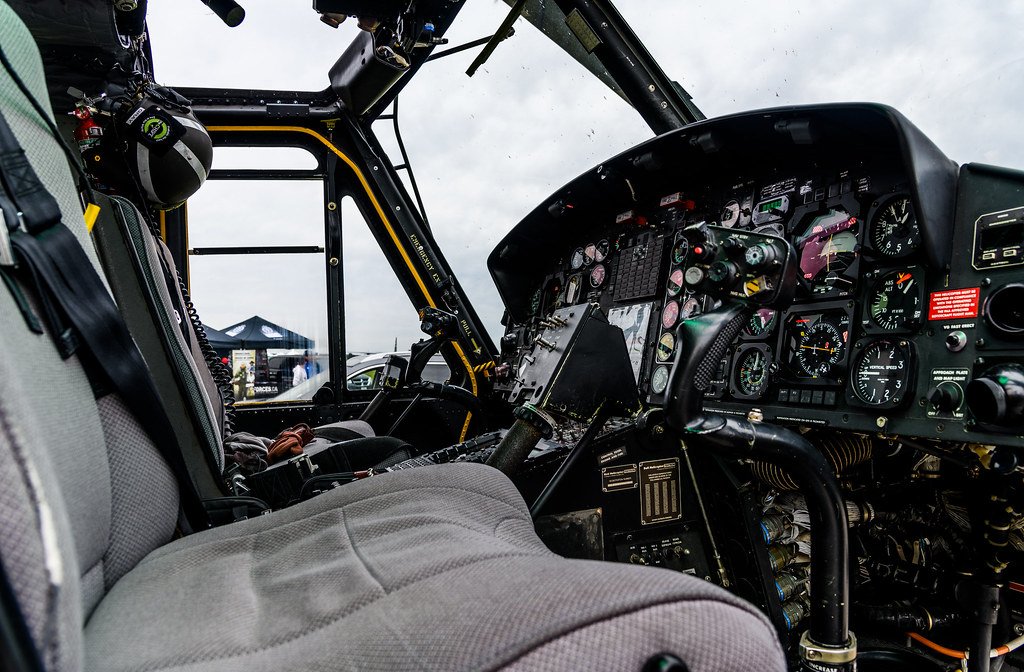
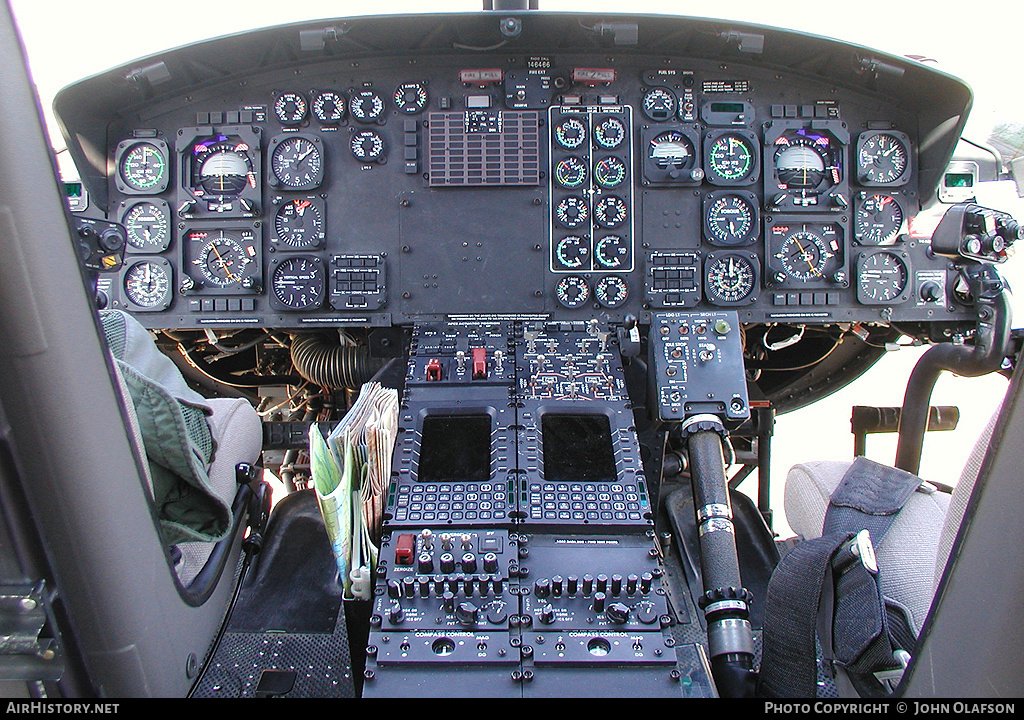
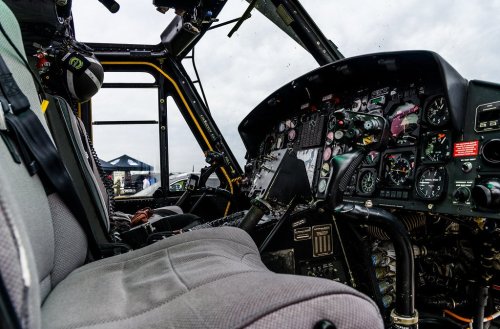
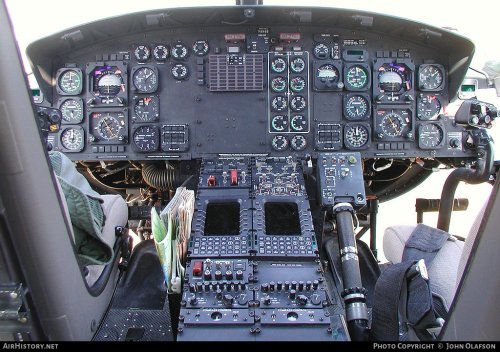
From the pictures it looks pretty analog to me
-
Just stating for the record the first production batch of 39 ACSVs was diverted to Ukraine so these 4 are the second batch and the first foe the Canadian army.
-
Minister Blair officially accepts delivery of first new Armoured Combat Support Vehicles for the Canadian Army From: National Defence News release October 19, 2023 – Garrison Petawawa, Ontario – Department of National Defence / Canadian Armed Forces Today, the Honourable Bill Blair, Minister of National Defence, and General Wayne Eyre, Chief of the Defence Staff, visited Garrison Petawawa where the first four new Armoured Combat Support Vehicles (ACSVs) were officially accepted by the Canadian Army. Minister Blair and General Eyre toured the newly-arrived armoured vehicles, which represent the first of 360 Armoured Combat Support Vehicles that will be delivered to the Canadian Army over the coming years. These first four vehicles are the ambulance variant, which will be equipped with medical supplies and an internal layout that will allow for the treatment of a wide range of injuries. Procured through the Armoured Combat Support Vehicle project, these vehicles will provide the Canadian Armed Forces (CAF) with a modernized, armoured combat support fleet which will ensure the members of the Canadian Army have the tools that they need to conduct operations in Canada, and abroad. These vehicles are general-utility combat support vehicles that will fulfil a wide variety of support roles on the battlefield – including serving as troop transport, command vehicles, electronic warfare, mobile repair, and various combat engineering tasks. They will provide a high degree of maneuverability and protection to their crews and payloads. This procurement is delivering major economic benefits for Canada. The 360 ACSVs are being acquired thanks to a $2 billioninvestment with General Dynamics Land Systems - Canada. This project is supporting 1,975 jobs annually in London, Ontario and across the country, as well as contributing $250 million dollars annually to Canada’s Gross Domestic Product over an eight-year period. The delivery of the ambulance marks the first of eight variants to be received by the Canadian Army under the ACSV project. Training for both maintainers and operators of the vehicle is scheduled to begin this month. Quotes Quick facts Under Canada’s defence policy, Strong, Secure, Engaged, we previously expected initial delivery in 2025. National Defence and the CAF were able to advance this procurement to a faster timeline, which is good news for CAF members. The new fleet of ACSVs will all be based on the Light Armoured Vehicle (LAV) 6.0 and will replace the current LAV II Bison and M113 Tracked LAV fleets. The LAV 6.0 is a tested and proven platform that meets the Canadian Army’s needs, and having similar combat support vehicles will offer operational advantages to the CAF, including reduced training and sustainment costs, as well as the availability of common spare parts to fix vehicles quickly during critical operations. The ACSV will provide the CAF with a new fleet of armoured support vehicles employed in eight variants: Command Post, Mobile Repair Team, Maintenance and Recovery Vehicle, Ambulance, Electronic Warfare, Engineer, Troop Cargo Vehicle, and Fitter Cargo Vehicle. CFB Petawawa is receiving the first of the ambulance - armoured support vehicles, a total of 49 vehicles will be delivered to bases across Canada in the coming months. The Industrial and Technological Benefits Policy applies to this contract, ensuring that General Dynamics will invest equal to the value of the contract back into the Canadian economy, providing opportunities for Canadian small and medium businesses, and supporting innovation and skills development for Canadian workers. In summer 2022, Canada announced the donation of 39 Armoured Combat Support vehicles to Ukraine, which have all been delivered. On September 22, 2023, Prime Minister Justin Trudeau announced a new investment of $650 million over three years to supply Ukraine with 50 armoured vehicles, including armoured medical evacuation vehicles, built by Canadian workers in London, Ontario. Associated links Strong, Secure, Engaged Armoured Combat Support Vehicle - Canada.ca https://www.canada.ca/en/department-national-defence/news/2023/10/minister-blair-officially-accepts-delivery-of-first-new-armoured-combat-support-vehicles-for-the-canadian-army.html
-
I had noticed that the upgrade project details mention “upgraded” engines but nowhere did anything say they would be more portable or add to performance so assumed the engine upgrades are just to address parts obsolescence or maybe fuel efficiency. Hey at least they’re finally getting digital instruments….even though glass cockpits existed 30 yrs ago when they first bought the griffons back in the 1990s. I swear the current analog cockpit doesn’t look much different from the old 80s era Cessna 172s I used to fly.
-
EU THREATENS MUSK UNDER NEW EU DIGITAL SERVICES ACT
BeaverFever replied to Nationalist's topic in The Rest of the World
Yeah ok Mr “Jewish Nazi” “Biolab” Putin puppet who has been predicting Putin’s imminent victory any day for nearly 2 years now, not ti mention your stolen 2020 election nonsense. You have zero common sense and your obsessive posting at the start of this thread where you were only one in the conversation shows you were either having a mental malfunction or were impaired